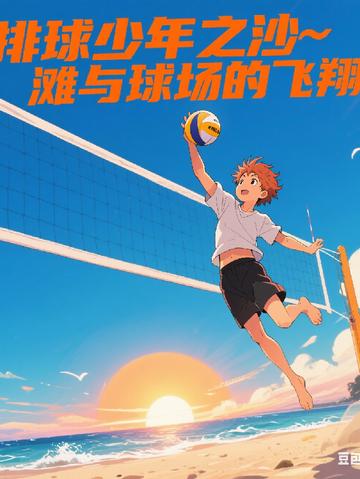
After graduating from high school, Hinata Shoyo went to Brazil with his passion for volleyball, but accidentally fell in love with beach volleyball on the beach in Rio. Different from the teamwork of indoor volleyball, the scorching sun and sand on the beach taught him the courage to "carry the whole court alone" - every dive to save has to fight against the resistance of the sand, and every smash requires independent judgment of the opponent's blocking trajectory. Under the guidance of Carlos, a retired sand volleyball player, this "little giant" who once relied on setters gradually developed precise jumps, flexible smashes and anticipatory defense. He also understood that "volleyball is not just about height, but also about absolute control of the court."
After returning to the professional arena, Hinata broke into the Japanese V1 League with the "wild energy" given by the beach. However, he encountered doubts due to the conflict of technical styles: the coach accused his smash of "deviating from the tactical system", and the media ridiculed that "beach habits are difficult to achieve elegance." But he never compromised, blending the explosive power of sand volleyball with the tactical nature of indoor volleyball into a unique style - tearing up a pass with a sand volleyball jump serve, breaking through high blocks with a change of direction smash, and filling the gaps of his teammates with his single defensive range. From the reserve team substitute of Tokyo United Club, to the "lightning support" in Serie A, and then to the core of the Japanese national team, he gradually broke the prejudice that "it is difficult for a small man to become a professional superstar".
On the court, he and Tobio Kageyama went from being a golden partner to a top rival, using "light speed setter" and "beach line changing" to interpret the ultimate aesthetics of volleyball; on the sidelines of the training ground, fans held up support signs for "Beach Elf" and shouted, and the media tracked his every step in "rewriting the volleyball textbook". Finally, in the Olympic bronze