#Historicalreflection #travel #groupportraits #strategy #Warring States #Tokugawa Ieyasu #Warring States through #Toyotomi Tokugawa strategy
Japan's Warring States Time Travel | Hard-core Machiavellian Strategy | Bastard's Counterattack | Father-son Blood Feud | The Mysterious Case of Taige Yiyin | Historical Research Party | Samurai Politics | Battlefield Realism |
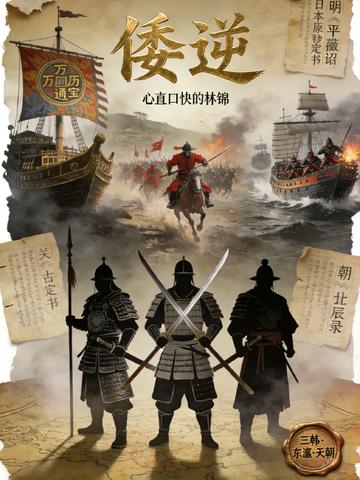
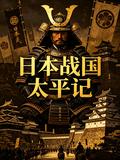
In the fifth year of Qingchang (1600), the undercurrent in Japan was surging on the eve of the Battle of Sekigahara. Lu Chen, a modern all-A fighting champion, accidentally traveled through time and became "Tora Chiyo", the bastard son of Owari daimyo Fukushima Masanori. As the son of a lowly concubine, he endured the blood and tears of his mother, Kira Haru, and because of his suspected identity as the illegitimate son of Toyotomi Hideyoshi, he became a secret chess piece in the game between Tokugawa, Ishida, and Fukushima.
Reader comments
Personally, I think I worked very hard and deserve full marks, even if I write daily chapters, I have hooks. It also hedges against some malicious pressure points.
The plot between Hachisuka Yukio and Tora Chiyo was not love at first. The protagonist's mentality can be found in Chapter 2. Fukushima Masanori thought that the protagonist was just being obedient. Yukio's state of mind is described during their first meeting in a private house. In addition, for the description of the protagonist, the humanoid succubus, you can refer to Japan's obsession with tall people. Even after the Meiji, in mainland China, if the height is not as tall as Tora Chiyo, there is still a high probability of being selected for the saber team. After graduating from the Mainland Army Saber Team, in terms of military rank, he has been fighting for 25 years less and is called Major ahead of schedule. Even if they have the same military rank, the difference between a Shao Dou with saber connections and an ordinary Major is greater than that between a human and a dog. Finally, let's talk about Ieyasu's obsession with Kiraharu. It is not simply about appearance, because it is a phenomenon of subculture succumbing to the mainstream circle. It is like the first time Yamazato saw black stockings, high heels and long legs. In other words, in the context of the plot, although Japan does not have three-inch golden lotus, it does not mean that Japanese people don't like it. The cases the Japanese have seen are all from poor people, and they have not seen cases from Jiangnan scholar-officials. For example, when Shanliwa first saw black stockings and high heels worn by an uncle who weighed more than 300 pounds, she wouldn't like them. The reason why I say that what I write is not nonsense is because I review it a lot in my mind.
Great. The two best Japanese Sengoku novels I have read in recent years are this book and "The Self-Cultivation of the Sengoku Samurai". The author's level is really good, almost comparable to "Dreams of Tosa".
So far, it looks okay. The suspicion of bloodline [smile] has a bit of a Machiavellian feel... Other things that I don't understand may be the pitfalls of the author... I have to keep reading... For me, it is starting to be attractive [eating melon]
Tokugawa and the protagonist are fucking true love, one doesn't treat women as human beings, the other pursues power and wants to get it even if he sees a glimmer of hope! The life-saving protagonist is just a fig leaf! It's exciting but also weird! We all know that if our son returns after having a contraceptive syndrome, his IQ will be significantly weakened. What will happen in the end?
How can I put it this way? It's one of the best-written movies on Tomato. The plot has ups and downs and a lot of foreshadowing. It's very interesting but still has some shortcomings.
1. The connection between the timeline and the plot is too confusing. It feels like there is only a rough outline, and the rest is written as you go, forget it. Sometimes it feels very abrupt after reading the previous chapter and then looking at the next chapter (like a incomplete work)
2. The second is the problem of historical records. You can write about what was recorded by later generations, but the specific plot of the foreshadowing still needs to be written thoroughly. It is too difficult to describe it in one sentence. For details, please refer to "Jiuzhou Piaomiao Lu"
In the previous part, the records of later generations were written, but when writing the specific plot, Jiangnan did not mention it in one stroke, but left descriptions and blanks.
Then I was too lazy to type. I was so tired of typing. Although there were problems, the flaws were not concealed. It was still considered an excellent work, so it received a four-star rating [blowing kiss]
It's a great online novel with good character development and is historically accurate. The plot progresses a bit too fast in some chapters. For example, the chapter where the protagonist's mother committed suicide could have used more words [making faces], but it also shows that the author is very sincere.
Besides the protagonist, why would you want to have a time traveler?
Let me boldly guess that the author moved it from the Neon Novel Library. This purely Japanese-style narrative is not my writing style. Because the small pattern is congenital. Yet the writing flows smoothly. Worth five stars.
Personally, I think it's very good, but it's really sad that the main character's mother passed away like this, alas. And in fact, there is no need to deliberately imitate ancient Chinese writing. If the writing is not good, it will be inconsistent, and the fighting scenes feel that there are indeed too few written. But overall it's good
If you are tired of reading about the mass production of sugar soap just by talking, you can read this book. I'm surprised that the rating is low, but I can understand it after seeing some of the comments at the beginning. After all, some people just like to rate novels with Ming backgrounds as inferior to Qing Dynasty, and novels with Qing backgrounds as Ming Dynasty novels. I only like to read Long Aotian's books. I hope the author won't blame them too much. They just read less. If they read more, they will naturally look for Baihua's [Like]
It's grand and meticulous, emotionally delicate, and very picturesque!
It's a very good Japanese Warring States novel. It's not a cool novel. The protagonist is aggrieved, but this is right and normal. Without strength and status, everything is just empty talk.
The writing is good, but unfortunately there are some errors or typos that affect the perception.
The overall narrative of the novel is smooth, the characters' actions are logical, and the writing is good. It is worth recommending. If you want to change your taste and not always be "cool", this book is worth reading for diode book lovers.
Is the author female? It's well written, but it doesn't taste right. But it's really well written and beautiful.
It can be seen that the author is very serious about writing and has checked a lot of information. The details are very good.
Delicate writing style and well-researched historical data
The theory is clear and well-organized. It is a rare book.
Very strong, I saw a young ambitious hero from Japan's Warring States period.
Recommended by Shuhuang, compared to other Neon Warring States novels, it is quite innovative.
I love watching it. Come on, I especially like the comparison between the two time travellers. It's so real.
Very interesting novel
Launch a praise offensive!
I have read a lot of books about Japan's Warring States Period, and this is the best one besides "The Chronicles of Lucky Stars during the Warring States Period"! It has a very Japanese sense of time and place!
Very nice, recommended.
Xia Ke Shang is really the essence of the book.
The first time I came into contact with this subject was Sister Shangshan's book, and then Heita Xiao. Later I fell in love with this genre. The protagonist in this book is very individual and has the temperament of a tyrant. Especially when he was a child, he was unable to resist the big environment and could only go with the flow. It felt very good. It's just that he suddenly gained momentum too quickly. I can probably write about 20 chapters during that period.
Personally, I think I worked very hard and deserve full marks, even if I write daily chapters, I have hooks. It also hedges against some malicious pressure points. The plot between Hachisuka Yukio and Tora Chiyo was not love at first. The protagonist's mentality can be found in Chapter 2. Fukushima Masanori thought that the protagonist was just being obedient. Yukio's state of mind is described during their first meeting in a private house. In addition, for the description of the protagonist, the humanoid succubus, you can refer to Japan's obsession with tall people. Even after the Meiji, in mainland China, if the height is not as tall as Tora Chiyo, there is still a high probability of being selected for the saber team. After graduating from the Mainland Army Saber Team, in terms of military rank, he has been fighting for 25 years less and is called Major ahead of schedule. Even if they have the same military rank, the difference between a Shao Dou with saber connections and an ordinary Major is greater than that between a human and a dog. Finally, let's talk about Ieyasu's obsession with Kiraharu. It is not simply about appearance, because it is a phenomenon of subculture succumbing to the mainstream circle. It is like the first time Yamazato saw black stockings, high heels and long legs. In other words, in the context of the plot, although Japan does not have three-inch golden lotus, it does not mean that Japanese people don't like it. The cases the Japanese have seen are all from poor people, and they have not seen cases from Jiangnan scholar-officials. For example, when Shanliwa first saw black stockings and high heels worn by an uncle who weighed more than 300 pounds, she wouldn't like them. The reason why I say that what I write is not nonsense is because I review it a lot in my mind.
Great. The two best Japanese Sengoku novels I have read in recent years are this book and "The Self-Cultivation of the Sengoku Samurai". The author's level is really good, almost comparable to "Dreams of Tosa".
So far, it looks okay. The suspicion of bloodline [smile] has a bit of a Machiavellian feel... Other things that I don't understand may be the pitfalls of the author... I have to keep reading... For me, it is starting to be attractive [eating melon]
Tokugawa and the protagonist are fucking true love, one doesn't treat women as human beings, the other pursues power and wants to get it even if he sees a glimmer of hope! The life-saving protagonist is just a fig leaf! It's exciting but also weird! We all know that if our son returns after having a contraceptive syndrome, his IQ will be significantly weakened. What will happen in the end?
How can I put it this way? It's one of the best-written movies on Tomato. The plot has ups and downs and a lot of foreshadowing. It's very interesting but still has some shortcomings. 1. The connection between the timeline and the plot is too confusing. It feels like there is only a rough outline, and the rest is written as you go, forget it. Sometimes it feels very abrupt after reading the previous chapter and then looking at the next chapter (like a incomplete work) 2. The second is the problem of historical records. You can write about what was recorded by later generations, but the specific plot of the foreshadowing still needs to be written thoroughly. It is too difficult to describe it in one sentence. For details, please refer to "Jiuzhou Piaomiao Lu" In the previous part, the records of later generations were written, but when writing the specific plot, Jiangnan did not mention it in one stroke, but left descriptions and blanks. Then I was too lazy to type. I was so tired of typing. Although there were problems, the flaws were not concealed. It was still considered an excellent work, so it received a four-star rating [blowing kiss]
It's a great online novel with good character development and is historically accurate. The plot progresses a bit too fast in some chapters. For example, the chapter where the protagonist's mother committed suicide could have used more words [making faces], but it also shows that the author is very sincere.
Besides the protagonist, why would you want to have a time traveler?
Let me boldly guess that the author moved it from the Neon Novel Library. This purely Japanese-style narrative is not my writing style. Because the small pattern is congenital. Yet the writing flows smoothly. Worth five stars.
Personally, I think it's very good, but it's really sad that the main character's mother passed away like this, alas. And in fact, there is no need to deliberately imitate ancient Chinese writing. If the writing is not good, it will be inconsistent, and the fighting scenes feel that there are indeed too few written. But overall it's good
If you are tired of reading about the mass production of sugar soap just by talking, you can read this book. I'm surprised that the rating is low, but I can understand it after seeing some of the comments at the beginning. After all, some people just like to rate novels with Ming backgrounds as inferior to Qing Dynasty, and novels with Qing backgrounds as Ming Dynasty novels. I only like to read Long Aotian's books. I hope the author won't blame them too much. They just read less. If they read more, they will naturally look for Baihua's [Like]
It's grand and meticulous, emotionally delicate, and very picturesque!
It's a very good Japanese Warring States novel. It's not a cool novel. The protagonist is aggrieved, but this is right and normal. Without strength and status, everything is just empty talk.
The writing is good, but unfortunately there are some errors or typos that affect the perception.
The overall narrative of the novel is smooth, the characters' actions are logical, and the writing is good. It is worth recommending. If you want to change your taste and not always be "cool", this book is worth reading for diode book lovers.
Is the author female? It's well written, but it doesn't taste right. But it's really well written and beautiful.
It can be seen that the author is very serious about writing and has checked a lot of information. The details are very good.
Delicate writing style and well-researched historical data
The theory is clear and well-organized. It is a rare book.
Very strong, I saw a young ambitious hero from Japan's Warring States period.
Recommended by Shuhuang, compared to other Neon Warring States novels, it is quite innovative.
I love watching it. Come on, I especially like the comparison between the two time travellers. It's so real.
Very interesting novel
Launch a praise offensive!
I have read a lot of books about Japan's Warring States Period, and this is the best one besides "The Chronicles of Lucky Stars during the Warring States Period"! It has a very Japanese sense of time and place!
Very nice, recommended.
Xia Ke Shang is really the essence of the book. The first time I came into contact with this subject was Sister Shangshan's book, and then Heita Xiao. Later I fell in love with this genre. The protagonist in this book is very individual and has the temperament of a tyrant. Especially when he was a child, he was unable to resist the big environment and could only go with the flow. It felt very good. It's just that he suddenly gained momentum too quickly. I can probably write about 20 chapters during that period.
Support support support