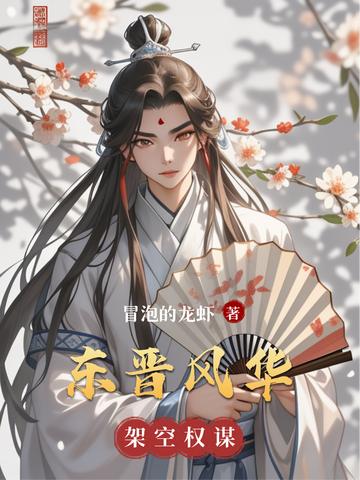
Rain fell softly at dusk. Above the gate of a bamboo-fenced courtyard on the outskirts of Jiankang, the boast “I’ll embrace the mountains and rivers, then laugh at the history books” seemed to cry out in silence from the weathered wood grain. Fifteen-year-old Lu Chang stood alone beneath the eaves, holding an umbrella. Through the curtain of rain, he saw the rigid barriers beneath the Eastern Jin’s glittering prosperity: the old, prestigious families of Jiangdong, Gu, Lu, Zhu, and Zhang, had little more than empty titles to their name beside the formidable power wielded by northern émigré clans like the Wang family of Langya and the Xie family of Chen Commandery.
The orphaned son of a fallen Lu family, Lu Chang carried a jade pendant engraved with mysterious ancient script and a score left by his parents, the hauntingly solitary “Melody of the Secluded Valley.” In this chaotic age, where family status was as unyielding as iron, he drifted like duckweed. A chance encounter at a bookshop bound him to Xie Xuan, a prodigy of the Xie family of Chen Commandery. Then, at Vermilion Bird Bridge, he caught a fleeting glimpse of Xie Daoyun, the most gifted woman south of the Yangtze, whose gaze held a note of inquiry.
A covert struggle between the Daoist families devoted to the Way and the lay officials of the Celestial Master Way was quietly spreading. Zhang Sheng’s lost trove drew covetous eyes from every side, and the key to unraveling its mysteries pointed, impossibly, to the unknown “Melody of the Secluded Valley” in Lu Chang’s hands! The elegant gatherings of the Wang and Xie clans concealed sharp words and hidden schemes. At the Sima’s Council Hall, debate over Huan Wen’s proposal to move the capital unleashed a storm, while the shadow of the Daoist families had already fallen over the household of the man who would “embrace the mountains and rivers.”
From debating Zhuangzi at Dongshan, where “entering the gaps with no thickness leaves room to maneuver,” to arguing over “popular support and grain supplies” at the Council Hall, striking at the heart of the capital-relocation debate, Lu Chang applied an insight beyond his time and a practical edge to navigate the tangled game, advancing one careful step at a time. The road ahead was thick with thorns: the Wang family of Langya’s suspicion and suppression, Huan Wen’s warlord regime watching like a hawk, the perilous whirlpool of infighting within the Celestial Master Way, and the contest over a secret trove hanging over him, a trove meant to restore the Celestial Master lineage...
Okay, okay, this article is very good, but it's a pity that the score is not obvious. This article ranks among the top three historical articles. I have read many historical novels and written classical Chinese articles. It is extremely comfortable. I finally found a like-minded classmate.
This book is really well written, and I still have the desire to read it in front of old bookworms. I don't know why the rating has not gone up. Maybe there are too many readers who are used to reading novice articles, and they are not used to such good articles occasionally. I hope the author will continue to work hard in the future, gold will always shine.
The writing is very good and the plot is clear and not confusing.
It's okay. It can be seen that the author wrote it carefully.
The writing skills are profound and the stories are interlocking. So far, it is well written and worth recommending.
The writing is good, just like the thieves and the three crazy teachers
The writing is good, but the logic of the story is not enough, and the protagonist is not a celebrity, so he will not attract so much attention.
It can be said to be of the highest quality, but it still needs encouragement, the background and details still need to be polished, and the writing style still needs to be diligent. Writing things, describing things, and being deliberate. Drawing people based on history, not relying on things, is a treasure.
It's beautiful, good luck to the author!
Beautiful! Come on, author