One book to understand the unfathomable imperial statecraft of the three great Qing emperors Kangxi, Yongzheng, and Qianlong.
The Qing dynasty ruled a vast Han population with a small ethnic minority. Anxiety over the legitimacy of its rule gave rise to the Qing emperors' extreme desire for control. They turned ethnic tensions and cultural insecurity into political tools, taking the art of imperial power in feudal China to its peak and final expression.
1. Kangxi's art of balancing power: maintaining stability through dynamic equilibrium
Emperor Kangxi tacitly allowed the two factions led by Mingzhu and Suo'etu to attack each other. Once they threatened the stability of his rule, he successively instructed censors to impeach and eliminate them. For the ten years after he deposed the crown prince, Kangxi allowed several capable adult princes to scheme and slaughter one another, testing them under pressure while maintaining the singularity of imperial power. Kangxi truly kept "competition" and "control" at a delicate balance.
2. Yongzheng's secretive politics: defusing a legitimacy crisis through an "institutional black box"
Emperor Yongzheng used the Grand Council to overturn the tradition of deliberative government, locking major policies behind the high walls of the inner palace. He introduced the secret memorial system, building an around-the-clock surveillance network, and used his vermilion rescripts to strike fear into the hearts of officials. He secretly designated an heir, ending succession disputes and turning the transfer of imperial power into Yongzheng's unilateral decision. This system of secret politics transformed doubts that he had "seized the throne unjustly" into the political capital to rule with absolute authority.
3. Qianlong's psychological intimidation: establishing a master-slave relationship through cultural terror
Emperor Qianlong used merciless literary inquisitions to make everyone live in fear. He arbitrarily controlled the fates of veteran officials such as Zhang Tingyu, leaving the safety and dignity of all ministers subject to the emperor's thunderous wrath or gracious favor. In the name of the Siku Quanshu, he carried out the burning and banning of books. Qianlong's methods of rule evolved into a hunt for the souls of the literati, thoroughly transforming the Han tradition of "rulers and ministers governing together" into a master-slave relationship.
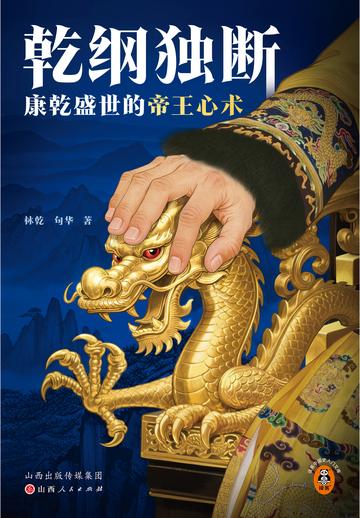









A nation that only has a strong body but not a strong spirit is sad. This book is very well written. It writes the history of the Qing Dynasty with the prosperous period of Kangxi and Qianlong as the main content. It focuses on highlighting the personal information of the emperors at that time and their different attitudes towards speech. It uses a lot of historical facts to describe the Qing Dynasty at that time. The background of various policies and the attitude of the emperor, as well as the bibliography, are very academic and professionally written. The only flaw is that the title of the book "The Emperor's Mind" is too vague and is not pointed out directly. It just blindly writes about the emperor's actions, which feels a bit off-topic haha 😄