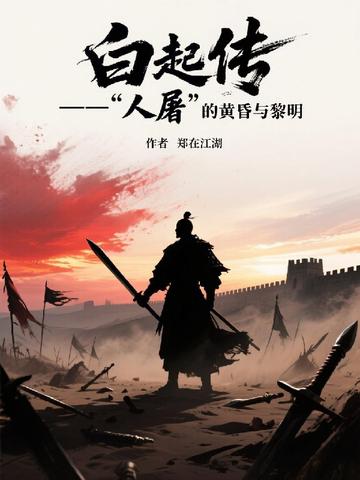
Bai Qi was a renowned general of Qin during the Warring States period, celebrated for his exceptional military talent and infamous for his brutal slaughter. He fought for 37 years without a single defeat, annihilating around 1.65 million soldiers from the six states and laying the groundwork for Qin’s unification.
A tactical genius: The Battle of Yique, in which he annihilated 240,000 troops; the Battle of Yan and Ying, in which he captured Chu’s capital; and the Battle of Changping, in which he buried 400,000 soldiers alive, all set records for annihilation campaigns and cemented his standing as a master of warfare.
Strategic importance: He captured more than 70 cities, severely weakening Han, Wei, Chu, and Zhao, and opening the route east for Qin.
Historical standing: He is counted alongside Lian Po, Li Mu, and Wang Jian as one of the four great generals of the Warring States period. In the Tang dynasty, he was named one of the Ten Philosophers of the Martial Temple.
Controversy over his massacres: For killing 400,000 surrendered soldiers at Changping, along with more than a million captives in other battles, he was called the “Butcher.”
Political downfall: After refusing to attack Zhao, he angered King Zhaoxiang of Qin and was framed by Fan Ju and sentenced to death. Before dying, he acknowledged that he deserved punishment for killing surrendered soldiers.
Assessments by later generations
Militarily: Widely recognized as a master tactician, his ideas on annihilation campaigns influenced military thought in later eras.
Morally: The Song dynasty removed him from the Ten Philosophers of the Martial Temple because his bloodlust was considered excessive. From the Yuan dynasty onward, however, he was gradually deified as a Daoist god of war.