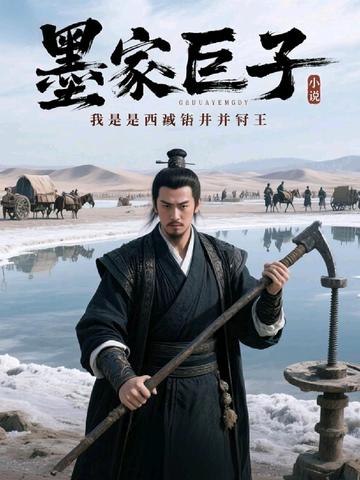
"The Mohist Giant: I Digged Wells and Became King in the Western Regions" takes the situation in the Western Regions where the Han and Hungarians were fighting for hegemony as the background and tells the legendary journey of Zhao Ling, the descendant of the Mohist family, in the Western Regions. Different from traditional military narratives, the protagonist relies on mechanical skills and strategies to write 85% of the original legend in the historical framework.
The novel is intertwined with three clues: Zhao Ling started the Silk Road economic war by controlling the Khotan jade mines and Yanqi salt pools, and used methods such as cutting off silk supply and burning counterfeit currency factories to disrupt the Xiongnu trade network; he promoted the integration of the Central Plains calendar and the Western Regions' "Twelve Beasts Calendar", eventually leading to the promulgation of the "Western Regions Han Calendar"; at the same time, his improved double-coiled plow triggered the agricultural revolution in the Western Regions, and Mohist technological innovations such as crossbows and hole-attacking techniques were used throughout the war.
From escorting the merchant group from the Western Regions to encountering the Sand Scorpion Gang, to designing a two-pronged strategy for the surrender of the Japanese king, to the three-stage Han crossbow attack and the charge of the elephant soldiers in the chariot-division battle, the plot has ups and downs. Aisha's royal secret letter, Ayimu's golden man offering sacrifices to heaven, and Princess Jieyou's bilingual debate make the relationship between the characters more complicated. In the end, the mechanical drawings entrusted by Zhao Ling before his death left a technological spark that transcended civilizations for future generations, composing a Western epic about power, faith and integration.