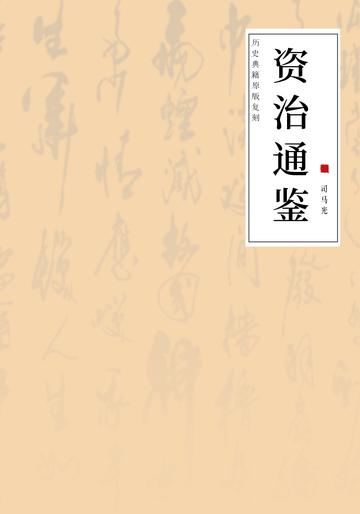
"Zizhi Tongjian" is a chronological general history masterpiece edited by Sima Guang of the Northern Song Dynasty. It has a total of 294 volumes and about three million words. It took 19 years to compile and cover the history from the Zhou Dynasty and the Warring States Period (three families were divided into Jin, 403 BC) to the Later Zhou Dynasty Shizong (959), which spanned 16 dynasties and about 1362 years.
Sima Guang (1019–1086) was born into a family of officials. He was fond of reading "Zuo Zhuan" since he was a child. During his time as an official in the court, he offended powerful officials many times, and finally chose to retire to Luoyang and personally preside over the compilation of history. He invited Liu Shu, Liu Tong, Fan Zuyu and other famous historians to assist him, and personally cut and finalized the manuscript. Through the rigorous and realistic method of "removing the redundancy and keeping the essence", he maintained a consistent writing style and profound insights throughout the book.
The purpose of this book is "to serve as a guide for the emperor" and "to govern the world with history". The narrative focuses on the emperor's decision-making, the rise and fall of rituals and music, institutional reform and the rise and fall of the emperor. It has detailed records and an accompanying commentary ("Chen Guang said") written by Sima Guang, providing warnings about the success and failure of ancient and modern times.
The whole book has extremely high historical value and literary charm. Whether it is describing the thrill of the Battle of Chibi or the psychological struggle in the Battle of Feishui, the narrative is as vivid as flowing clouds and flowing water, better than drama and fascinating; portraits of emperors, political affairs, civil servants and generals, and national conflicts are vividly displayed on the page.
All in all, "Zi Zhi Tong Jian" is not only the first chronological general history of Chinese historiography, but also a model work that set the standard for later generations of historiography. It has far-reaching influence and profound significance, and can be called an indispensable historical guide for emperors and scholars of ancient and modern times.