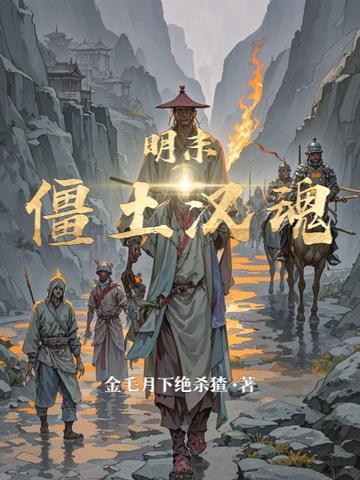
In the 16th year of Chongzhen's reign, the Little Glacier sealed off the last wheat field in Shandong. The floating corpses after the Yellow River burst its banks did not rot in the cold winter. The "zombie" that gnawed at the refugees spread from Chenqiao Town - this was not a natural disaster, but a reminder in troubled times.
When retired frontier soldier Zhao Cheng climbed out of the pile of corpses at the Qing army's massacre camp, he only had half a broken knife left in his hand. He had seen refugees kill each other over half a piece of moldy pancake, he had seen the Qing army drive living people into corpse pits to feed the zombies, and he had even watched the armored iron hooves crush the last refuge of the refugees. In the medicine box of Su He, the doctor's mother, the anti-zombie water is more expensive than the medicine for golden sores; the orphan Amiao's short knife first learned not to chop firewood, but to stab the head of zombies; even Li Xiucai, who could only read books by sages, began to mark "the area where the Qing army released zombies" on the map.
They stayed in the Yimeng Beacon Fort during the cold winter, used lime powder to block armor stiffness, and relied on traps to kill the Qing army's food team. However, they could not escape the deductions of Nanming officials and could not escape Duduo's nest of zombies. From the abandoned post station in Yanzhou Prefecture, to the red cannons at the top of Nanjing City, to the terraced fields in Xianxia Ridge, this group of refugees never defended a city—it was the human heart that had not been chewed to pieces by the plague, and the soul of the Han people that had not been crushed by the Qing army.
When the herbs in the mud of the Yellow River could cure zombies, and when the arrows from repeating crossbows penetrated the armor of the Qing army, they finally understood on this piece of zombie soil: if they want to live, they have to fight against the sky, the corpses, and the Manchus with butcher knives;
This is not an elegy for the Ming Dynasty, but a survival letter written by a living person to a living person on the frozen soil.