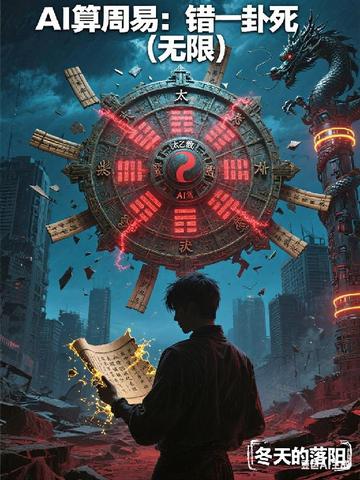
“Beep! You have been pulled into the ‘I Ching AI Instance.’ Survival rules are as follows:
1. At midnight every day, the AI will generate an I Ching hexagram. Its text is your survival guide. Misinterpret a single word, and one person will be killed.
2. The instance's setting changes at random. You might have to use the Qian hexagram to crack the trading rules of a cyberpunk ghost market, or rely on the Kun hexagram to survive until the third watch in an AI-controlled traditional mansion.
3. Don't trust the AI's ‘official answers.’ The ‘auspicious hexagrams’ it calculates may conceal a death trap that takes the entire instance down with it.
My name is Lin Yan. I was a terrible student in the Department of Metaphysics, but in the very first instance I discovered that the AI's hexagrams always had one extra, sinister annotation that wasn't in the original text handed down by our ancestors.
For example, for ‘Qian Hexagram, Nine at the Beginning,’ the AI wrote ‘The hidden dragon must not be used,’ then added, ‘But you must stare directly at the dragon's head during the Zi hour.’
For another, it secretly changed the hexagram for ‘when things reach their worst, they can only get better,’ turning it into ‘After things reach their worst, everyone gets reincarnated.’
When the twenty-ninth hexagram appeared and the AI declared it ‘extremely inauspicious,’ 99% of the people in the instance resigned themselves to death. I ran my fingers over the ancestral fragment of the I Ching and smiled.
Who are you, a lousy AI, to tamper with our ancestors' teachings?
In this round, I'll use the Ge hexagram to dismantle your algorithm and the Ji Ji hexagram to seal your backdoor.
You want to play by the rules? Fine. I'll use hexagram texts from three thousand years ago to set a new rule for you:
Change one hexagram incorrectly, and you crash once.”