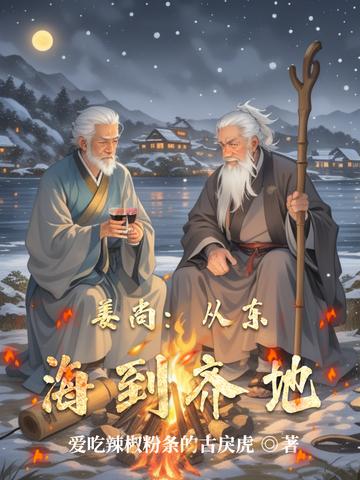
"Jiang Shang: From the East China Sea to Qidi" strips away the mythical filter and restores a "mortal" Jiang Shang who was beaten in the world.
He was once a young man who fished in Lv Village, listening to the waves and hiding the seeds of "the world is vast"; he was a loser on the streets of Chaoge, studying human relations when selling noodles, adhering to fairness when working as a butcher, and living with his wife Ma in the daily life of firewood, rice, oil and salt. He wasted half his life; he was a handyman carrying water in Kunlun, who realized that "practice is to cultivate the mind" from sweeping the floor and cooking stoves; he was a fisherman by the Wei River in Xiqi, using the sharpness of King Wen's Three Questions to reveal the answer to "the people's heart is destiny".
In the smoke of the Battle of Makino, he not only had the skills of war, but also showed consideration for the soldiers' fear; in the undercurrent of the Conferred God Platform, he fought for the godhood for the nameless soldier, and finally gave up the position of Emperor of Heaven, only willing to be a mortal who watched the wheat ripen. The wheat fields and salt fields of Qidi witnessed his use of market wisdom to dissolve tribal barriers and make the word "fairness" grow.
The book is divided into five parts to lay out its trajectory of more than 80 years, from East China Sea shells to Qidi wheat waves, from Chaoge account books to Fengshentai wooden slips. Every ordinary moment hides power - it turns out that the people who change the times are always ordinary people who refuse to bow to difficulties.