Stats
5.8Score
Synopsis
No synopsis yet.
We haven’t got an English blurb for this one. It appears once the source description has been translated.
Reader comments
In booklists 4
Ancient Chinese History, Three Kingdoms, Song, Ming
I have read all these books. Although there are some shortcomings, they are at least readable and not particularly eye-catching.
28.2MViews222Books2dUpdated
Looking for Books About Qin, Han, Tang, Song, Yuan, Ming and Three Kingdoms
2.9MViews268Books4dUpdated
A Novel Based on the Real History of the Three Kingdoms, Not the Romance of the Three Kingdoms.
860.9kViews116Books1dUpdated
Looking for History Books
I would like to read a book similar to "Britain: The Glory of an Empire on which the Sun Never Sets".
82.4kViews93Books10dUpdated
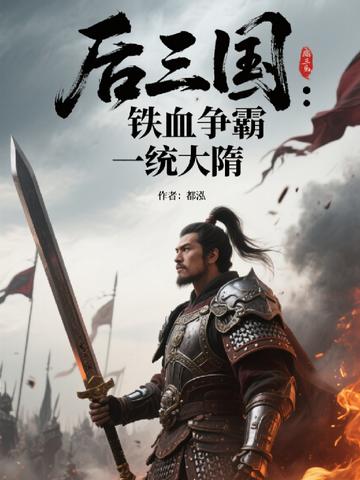
This is an epic story about three hundred years of madness and bloodshed in the Southern and Northern Dynasties. It writes down the lust for power, ruthlessness and fate of the heroes in troubled times into their own flesh and blood. There is bloodshed in the intrigues and deceitful palaces, battles for hegemony on the battlefield with swords and swords, fathers and sons turning against each other, brothers fighting against each other, powerful ministers usurping the country, and dynasties failing. Yu Wentai's ambitious and domineering strategy, Gao Huan's heroic character, Xiao Yan's twilight years, Chen Baxian's desperate measures, Yang Jian's forbearance and planning... Names rise and fall in the flames of war, and mountains and rivers are overturned under the iron heel. This is the most chaotic and passionate era, a Shura field where intrigue and betrayal coexist, and ambition and corpses walk side by side. Power and strategy are the passports of heroes, and iron and blood are the epitaphs of troubled times. When the book was closed, I was still shaken by the desolation and majesty that hit my face, and it was hard to calm down for a long time. Five-star praise! Wonderful and ups and downs, worth reading!
[Five-Star Recommendation] "The Later Three Kingdoms: The Iron-Blooded Struggle to Unify the Sui Dynasty" is a magnificent, hard-core and resourceful work of history, power and hegemony created by the writer Du Hong. The story unfolds in the turbulent Shura field at the end of the Northern and Southern Dynasties. Yu Wentai, Gao Huan, Dugu Xin and other heroes and generals, each with their own sharp personalities - some are far-sighted, some are ambitious, or some are decisive in killing - compete for power and betrayal in the world. The core theme of the work is "the intertwining of iron-blooded battles and temple intrigues, panoramically presenting the epic picture of dynasty change in the post-Three Kingdoms era". The most recommendable thing about it is that it completely abandons systematic cheating and uses solid historical details, grand war scenes and complex three-dimensional character portraits to truly restore the troubled times that were more bizarre and cruel than the Three Kingdoms at the end of Han Dynasty, and bring readers a hard-core historical feast full of tension and immersion.
I recently read a very good historical novel. It is unsystematic and respects history, but it is also suspenseful and full of excitement. Multiple protagonists and multiple main lines, competing for supremacy and fighting wits and courage. The heroic Yu Wentai single-handedly built the Guanlong Cavalry and determined to reshape the world. The overlord of the late Wei Dynasty, Gao Huan, was ambitious, advocated force, and wanted to annex the world. Keep reading to see who can dominate the world.
This story of ancient separatism has grand scenes, vivid content, vivid characters, and is super exciting. I like this work very much [OK][OK][OK][Like][Like][Like][Like] The sense of immersion is super strong and the story is exciting. I watched it to the end in one breath and I still feel unfinished👍👍👍
A more bloody and treacherous era than the Three Kingdoms at the end of Han Dynasty: the wonderful post-Three Kingdoms era. His struggle for hegemony, strategies and calculations are unforgettable after reading. The Northern Wei Empire overthrew in betrayal, and the Central Plains split into two major groups, the East and the West. Yuwentai, the Xianbei hero, single-handedly built the Guanlong Cavalry, and suddenly rose to prominence on the verge of death. Gao Huan of the Eastern Wei Dynasty dominated Hebei and also wanted to annex the world! There is also Xiao Yan of the Southern Dynasty, who was ignorant and sycophantic, and eventually harmed the country, and the prosperous Jinling was reduced to scorched earth! Chen Baxian rose up from the grass and held up the jade pillar in the south. Iron and blood, power and conspiracy have become the ultimate rules for survival in this troubled world. Dugu Xin, the handsome God of War, kills decisively! Yang Zhong, brave tiger, Crouching Dragon Yizhou! Mangshan was bloody and Jiangling fell! Father and son are at odds, brothers are at war! Changes of authority, mountains of corpses and seas of blood. Will the Yuwen family be the final winner in this iron-blooded struggle for hegemony?
This Jin Yong-style post-Three Kingdoms power strategy is so over the top! The author vividly writes about the troubled times of the Three Kingdoms after the Southern and Northern Dynasties, without the blessing of a golden finger of the system, relying entirely on the characters' wit and iron-blooded fighting to support the scene. The images of the heroes of the troubled times, such as Yu Wentai, Gao Huan, and Xiao Yan, are extremely stable. The plot of the game between power ministers and the change of dynasties is tightly paced, and every reversal makes people sweat. From the overthrow of the Northern Wei Dynasty to the unification of the Sui Dynasty, the machinations and battlefield battles of the great era are written in flesh and blood. The growth lines of characters such as Dugu Xin and Yang Jian are also very interesting. It not only restores the chaotic and bloody historical background, but also depicts the struggle of human nature in the desire for power with delicate brushwork. It's not mindless, but it relies on the solid plotting and historical details to make people want to put it down. Readers who like ancient plots and hegemony in troubled times will definitely find treasures!
With the undercurrent of power and intrigue, the battle between cavalry and cavalry, a post-Three Kingdoms epic unfolds magnificently! Focusing on the troubled times of the Southern and Northern Dynasties, the two heroes Yuwen and Gao Huan faced off, and the fates of Dugu Xin, Yang Zhong and other fierce generals were intertwined. The battle of wits and bloody battles go hand in hand, paving the way for the most brutal chaos on the eve of the unification of the Sui and Tang Dynasties.
This book outlines the chaotic times of the Three Kingdoms in a grand style, with princes competing for power, power plots intertwined, battlefield fighting and court games intertwined. The author cleverly adds details to the historical facts, making the road to hegemony both heroic and iron-clad, as well as treacherous and profound. From the separatism of the heroes to the unification of the world by Yang Jian, the journey of the Sui Dynasty and Zhaojian is magnificently written, which not only restores the character of the troubled times, but also highlights the historical inevitability of unification, making it a hearty read. Holding seven-star reviews!
It is a wonderful historical interpretation novel of the post-Three Kingdoms era. It vividly depicts the bloodshed of heroes fighting for world supremacy. The ups and downs of the plot are exciting. It is worth reading and supporting! ! ! !
A very good historical novel that does not systematically respect history, but is also suspenseful. The author seizes the opportunity to emerge heroes from troubled times and leads readers into an imaginative war era. Well received.
This work is a majestic and traditional work rooted in history. The work depicts the grand picture of the competition between multiple forces with solid writing skills. The author's writing style is smooth and his conception is ingenious. On the basis of respecting the historical framework, the author artistically reproduces the era when heroes emerged in large numbers and led to the prosperity of the Sui and Tang Dynasties. That period of history is really sad and sad.
An imaginative historical article, brilliant and fluently written.
Afterwards, the Three Kingdoms surged, and they were full of power and iron-blooded power. Where heroes rise and fall, they begin to dominate in troubled times. Excellent, five stars highly recommended.
It's really good, the writing is good, the prose is fluent, the story is novel, the plot has ups and downs, and the sense of substitution is particularly strong, making people unable to put it down after reading it. Recommend!
This ancient historical text is very brilliantly written. Being able to write the story of the post-Three Kingdoms era and the unification of the world in such an interesting and vivid way. The flow of the author's writing. The plot is vivid and interesting. The idea is novel. It is a rare story of historical intrigue. Like it like it like it
The author based on the historical facts of the Southern and Northern Dynasties to narrate this magnificent work. Not only does it not deviate from historical facts, but it also creates many reasonable details to make this period of history more full and interesting. Many abstract characters have become flesh-and-blood and more vivid through the author's shaping. The content of the novel is rich and colorful, and the plot has ups and downs. It is worth reading.
This book's grand narrative structure, vivid portraits and hard-core historical texture made me read it in one sitting and still feel unfinished. This work breaks away from the traditional themes of the Three Kingdoms and focuses on the post-Three Kingdoms chaos in the late Southern and Northern Dynasties, which was even more cruel than the Three Kingdoms. It uses iron blood and intrigue to outline an epic picture of power struggle, dynasty changes, and the emergence of heroes in large numbers. It will make people feel addicted after reading it. The most outstanding aspect of the work lies in its precise creation of the atmosphere of troubled times. It does not list historical events in a straightforward manner, but focuses on iron and blood, power and strategy, and unfolds the Shura field after the split of the Northern Wei Dynasty in a panoramic manner: Yuwentai of the Western Wei Dynasty built the Guanlong Iron Cavalry, Gao Huan of the Eastern Wei Dynasty fought for hegemony in Hebei, Nanliang was reduced to scorched earth in the Hou Jing Rebellion, and Nanchen stood up in the ruins. The tragedy of the bloodshed in Mang Mountain, the brutality of the jade battle, and the desolation of the fall of Jiangling. Each battle is thrillingly written, including the hearty battle of the war and the displacement of the people in troubled times. The reader can truly feel the darkness and cruelty of "Buddha sat and watched people eating each other", and has a strong sense of immersion. Character creation is the success of this work. It is not a facial expression of historical narrative. The heroes in the book all have complex and three-dimensional brilliance of human nature. Yu Wentai's unparalleled intelligence and foresight, Gao Huan's ambition and talent, the tension of the two lifelong enemies facing each other across the Yellow River runs throughout; Dugu Xin is "unparalleled in beauty but decisive in killing", both a warrior and a hero. A fierce general in the field is also the "most powerful father-in-law"; Yu Jin, from a humble soldier to a general of the Zhuguo Kingdom, paved the Qingyun Road with his iron-blooded march; while Yang Zhong is dormant in the shadows, quietly weaving a dragnet that ends three hundred years of chaos. In addition, whether it is the foolish Xiao Yan who ruined the country, the reckless rise of Chen Baxian, or the absurd and violent Gao Cheng and Gao Yang of the Northern Qi Dynasty, they are all portrayed vividly, making the chaotic history of "the emperor changed more frequently than the elementary school monitor" clear and vivid. I hope that this work will be seen by more people and they will be able to taste the Three Kingdoms, which is different in form and content. It is indeed a good historical masterpiece, with grand war scenes, realistic storylines, and well-crafted characters. Just like the Romance of the Three Kingdoms, I was deeply impressed by some of the characters after reading it.
This book is about the Three Kingdoms of the Later Han Dynasty and the struggle for power. But in my eyes, everyone in the story, from the officials in the court to the common people in the city, is vivid and three-dimensional. The story structure is very well arranged, showing readers a different story of the Three Kingdoms. A great book that will continue to be read. The writing quality is as solid as ever.
This book unfolds the bloody, treacherous and troubled times, intertwined intrigues, and vivid group portraits. The historical depth and narrative tension are both perfect. It is a five-star recommendation.
This work breaks away from the well-known narrative of the Three Kingdoms and focuses on the neglected "post-Three Kingdoms" troubled times in the late Southern and Northern Dynasties. It uses a solid historical context and ups and downs of power games to restore to readers the cruel truth of the struggle for hegemony between the Western Wei Dynasty, the Eastern Wei Dynasty, and the Southern Liang Dynasty. The author does not rely on the golden finger of the system, but uses real historical figures such as Yu Wentai, Yang Jian, and Dugu Xin as anchors, and fills the skeleton of the official history with vivid details: Dugu Xin's marriage arrangement hides the universe, Yang Zhong's iron-blooded journey from a soldier to the Zhu Dynasty is exciting, and Yang Jian's forbearance and counterattack under the shadow of powerful officials are even more gripping. The descriptions of battles such as the Bloodshed at Mangshan and the Fall of Jiangling include both the brutality of the battlefield and the undercurrents of the court. The theme of "iron and blood is the passport, power and strategy are the laws of survival" runs throughout. Compared to an overhead novel, it is more like a historical deduction with a sense of excitement, which not only satisfies readers' expectations for power and wit, but also buries a sense of historical depth in the arc of the characters. If you prefer hard-core Machiavellian and troubled stories about heroes, this book is worth reading.
This novel is absolutely amazing! The interlocking plot makes people want to stop, the characters are vivid and interesting, the writing is delicate and smooth, and every chapter is exciting. After reading it, I just want to shout "the author is so good at writing", five-star praise is a must!
The Wei, Jin, Southern and Northern Dynasties were the bloodiest and most turbulent periods in history. Warlords fight in disarray, the people are in dire straits, and regimes change frequently. Every time the regime changes, rivers of blood flow. The novel accurately describes this historical event, with grand scenes and numerous characters. It is a historical masterpiece and worth reading.
The author uses the historical background of the Three Kingdoms after that, and the plot is exciting. It is very wrong to transform into a soldier and participate in the charge. It must be recommended with five stars!
Can the Yuwen family have the last laugh? The bloodshed in Mangshan, the fall of Jiangling, the rebellion between father and son, the feud between brothers, conspiracy and betrayal run through the whole story. This period of troubled times is more bizarre than the Three Kingdoms. Every step is full of suspense and makes people want to stop.
I really like the history of the Southern and Northern Dynasties, and I look forward to seeing different stories in the author's writing!
In troubled times, tycoons emerge one after another, and their schemes are intertwined with iron and blood. It has a great sense of history, a great story, and a five-star rating.
The author writes fluently and the story is cleverly conceived. Full of history, five-star recommendation.
A masterpiece of historical Machiavellian writing! From the Three Kingdoms to the Sui and Tang Dynasties, the troubled times were used as paper, and Yu Wentai, Gao Huan and other heroes were used as ink to outline a magnificent iron-blooded epic. The writing is as thick and thick as a historian's swan song, vividly describing the fierceness of the Guanlong cavalry, the brutality of the jade soldiers, and the strangeness of dynasty changes. The characters are vivid and flesh-and-blood, and the machinations and logic are interlocking!
This work outlines the troubled times of the post-Three Kingdoms with majestic brush strokes, where the battle of power and wits intertwined with the iron-blooded conquest, and the tragedy of the fate of heroes and heroes is moving. I still want to read it after reading it, and I highly recommend it to book friends [Like][Like][Like]
This is a troubled time more cruel than the Three Kingdoms! The Xianbei hero Yu Wentai, the Hebei hero Gao Huan, and the reckless hero Chen Baxian fight on the same stage. Iron and blood are intertwined, and power and conspiracy collide. The bloodshed in Mangshan and the fall of Jiangling make every page burst into flames!