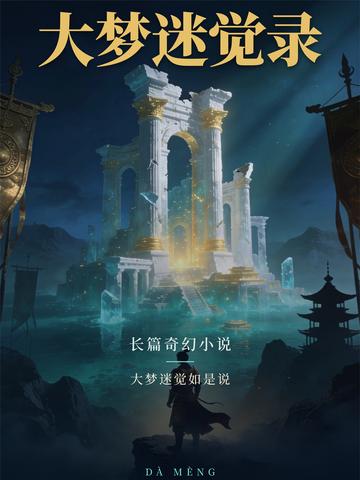
Life is like a dream, and dreams are like life. At the intersection of the long river of history and science fiction imagination, "The Great Dream" uses Han Xing's journey through time as its warp and weft to weave a picture of civilizational dialogue spanning 2,300 years. This work breaks through the narrative conventions of traditional time-travel novels. Through the unique setting of "symbiosis of spirits and bodies", it projects the spiritual dilemma of modern people into the situation of the Warring States Period, forming a contrast with great philosophical tension.
The author uses the body of Qi Xuan Wang Tian Biqiang as a carrier to bring Han Xing's modern consciousness into sharp collision with the ancient king's political mission. This setting not only creates a dramatic narrative conflict, but also profoundly reveals the eternal dilemma in human nature - how to stick to one's heart when personal destiny collides fiercely with the torrent of history? The image of Lu Chun, a village girl in the mountains, is particularly commendable. She broke into the historical whirlpool in search of her father, and eventually became the hub connecting modernity and ancient times, human nature and history. The creation of this grassroots hero subverted the elite-dominated narrative paradigm in traditional historical novels.
Within the framework of genre literature, this work achieves a triple inquiry into the nature of human nature, cultural inheritance and the spirit of the times. When we reread this fictional story of the Warring States Period in the 21st century, what we see is not only Han Xing's growth epic, but also an eternal proposition that every era faces: In the long scroll of fate, are we the writers or the objects being written?