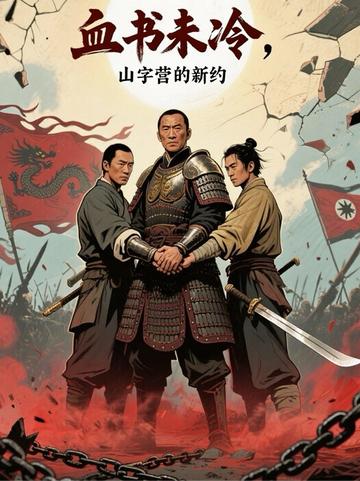
The butcher's knife in Shucheng was stained with blood, and the three brothers from Shanziying tore up their old dreams. Using wheat stubble as a formation, they confronted the Huai army's foreign guns; using equalizing fields as a promise, they declared war on famine and decay.
The wooden signs used by young men to lay mines, the foot-binding cloths cut by women, and the blood words carved in the tunnels by miners piece together a new covenant in which "the people have the final say." The sound of the Sino-Japanese War artillery shattered their dreams. They planted new wheat on the feudal ruins, letting the blood and soil grow sparks that could start a prairie fire.
Reader comments
For those of you who have read The Letter of Nomination, have you ever had the impulsive thought of wanting the protagonist to win? The movies Jet Li starred in all have a sense of mystery. The plot of the novel is extended by the Letter of Nomination, and the story of the movie is intentionally smoothed out. The novel fully understands the sufferings of the Sino-Japanese War and the Treaty of Shimonoseki (1894-1895), empathizes with the suffering of the nation, remembers the lessons of history, and reflects the Chinese people's eternal pursuit of national strength and national dignity.
For those of you who have read The Letter of Nomination, have you ever had the impulsive thought of wanting the protagonist to win? The movies Jet Li starred in all have a sense of mystery. The plot of the novel is extended by the Letter of Nomination, and the story of the movie is intentionally smoothed out. The novel fully understands the sufferings of the Sino-Japanese War and the Treaty of Shimonoseki (1894-1895), empathizes with the suffering of the nation, remembers the lessons of history, and reflects the Chinese people's eternal pursuit of national strength and national dignity.