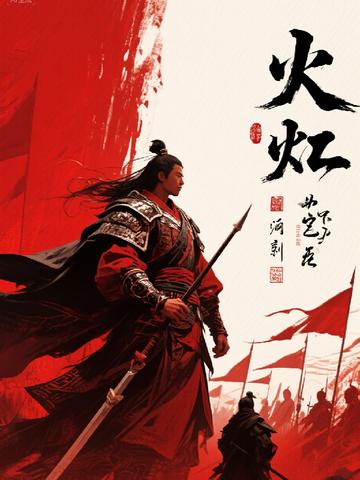
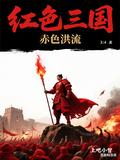
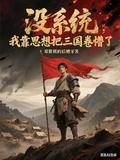
[Ideals + Blood and Fire + Resisting Corruption + Not an Overpowered Power Fantasy + Bring Tissues] I transmigrated to the end of the Han dynasty. Outside Luoyang, the ground was strewn with starving corpses. I clutched a sack of potatoes and faced twelve people, including Shi Hang, who were nearly starving to death. “Follow me, and you’ll have food.”
Dong Zhuo called me a “Yellow Turban remnant” and sent five thousand men to burn down my commune? No problem. As they fled through the cold and hunger, the people carried seeds on their backs and followed me. Cao Cao offered me a commandant’s post if I surrendered? No problem. At a mountain shrine, all nineteen founding elders voted against kneeling. Zhou Pan opened the gates to the enemy, and Shi Hang used his body to block the breach? No problem. I held the bloodstained sack of seeds and told the nineteen survivors, “The fire hasn’t gone out.”
The Xiongnu are after our grain? The Xianbei are marching south? Sun, Cao, and Liu have joined forces to crush us? No problem. Qin Lang’s blade protects the people, Meng Yao’s ledger keeps watch over the grain, and even Shi Hang’s ten-year-old son knows the “grievance committee” can impeach me. Someone wants special treatment? Meng Yao’s ledger and the grievance committee’s scathing denunciations are more fearsome than Qin Lang’s blade.
So what if the land is divided into three kingdoms? What I want is “equal fields, equal grain, and equal dignity.” Chen Jin has grown old? It doesn’t matter. The Red Flame Stele bears the words: “Change your colors, and blood will be shed in vain.” A thousand years later, when a child asks why people no longer kneel before officials, his grandfather points to the potato fields. “A bunch of fools shed too much blood for this.”
The idea is quite good, unlike the time-travel novels written in the millennium where people were vying for hegemony and becoming emperor.
It's quite interesting, but I just feel like some chapters are repetitive? Is the story repetitive or writing over and over again? I couldn't understand it at first. One moment I said no one was leaving, the next moment people were leaving again, and then the 300 people turned into more than 90 people.
How many times did a wealthy Zhao family kill so many people? He didn't know how to kill them when he had the chance, so he just let them go. If you have a thousand days to be a thief, how can you have a thousand days to guard against a thief?
The Kushan epic level has been strengthened, and 🤦 can directly attack the Shu Han. How to solve such a long supply line? According to the book, the protagonist's power includes the Huns and Xianbei, and the Kushan has been suppressed by the Huns. How to bypass the Chi Huo? In order to introduce Western logic, it is not necessary. Rome can also directly bypass the northern Red Fire Xiongnu coalition to trade with Cao Wei
Good, good, good
I can't stand it anymore. Every time the soldiers come and can be put back, they resist. I am not afraid to lead the soldiers to kill you directly. There are less than thirty people in total, and the weapons are less than three or four. The first time the soldiers killed two and escaped one by one. Even if the soldiers lost their memory, they forgot about you. The second time three soldiers captured the fugitives, but they resisted and still kept silent, haha.
The logic is clear; the writing is profound; the words are powerful;
Regarding the series of ideological stations between the protagonist and Cao Cao's camp in the article, it really shocked me a lot. Reflected in reality, the same scene has been playing out over and over again. As it should be, it makes people feel powerless. A staunch communist fighter, a short phrase that was incomprehensible before, but now admired. Even though I live in this country, I still have no faith.
Shouldn't we build high walls, accumulate food, and slowly become king? Why is it that not long after the game starts, everyone in the world becomes the enemy?
The theoretical part is good, much better than other dry red novels.