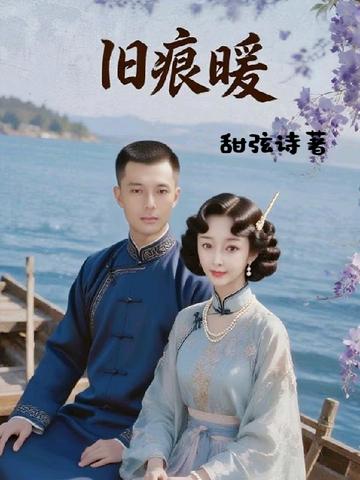
1. Protagonist
- Shen Yanzhi: From an involuntary adjutant in the Marshal's Mansion to a teacher at Jiangnan Bookstore. Carrying old family debts and war wounds (an old injury on his left arm, inner guilt), his character gradually changed from being forbearing and cold-blooded to being gentle and down-to-earth. The core growth is "letting go of hatred and self-salvation", and finally finding peace in education and mutual care.
- Su Wanyi: The bookstore girl whose family was ruined went from harboring hatred for the Shen family to becoming a caregiver at a health center. In the early stage, he was trapped by hatred, but in the later stage, he untied his knot in the truth and warmth, learned to "reconcile with the past", and found his self-worth in saving people and living in life.
The two are the dual core of the story, and their relationship goes from "enemies" to "confidants" to "companions", connecting the grievances and warmth of the entire story. 2. Story conception
The story starts from "Grudges in Troubled Times" and ends with "Fireworks and Reconciliation", and revolves around "Old Traces and New Life":
1. The starting point (the Marshal's Mansion and the war): Starting from the "hatred bond" between Shen Yanzhi and Su Wanyi, through the conspiracy of the Marshal's Mansion (the raid of the Su family, the death of the third concubine) and the war in Liyuan Town (Shen Yanzhi blocking the gun, Su Wanyi's cold treatment), the foreshadowing of grudges and character conflicts are laid.
2. Turning point (Jiangnan Bookstore): After the two settled in Jiangnan, through plots such as the old servant Zhang Ma returning with osmanthus wine and Chu Minghe sending a secret letter, they uncovered the truth about the old accounts of the Marshal's Mansion (the secret protection of Shen Yanzhi and the calculation of Mrs. Shen), and the hatred gradually loosened.
3. Development (reconciliation and growth): The two went to Peking to look for locust trees, Nanjing to pay old debts, Shen Yanzhi's transition to teaching, and Su Wan's study of Italian art.