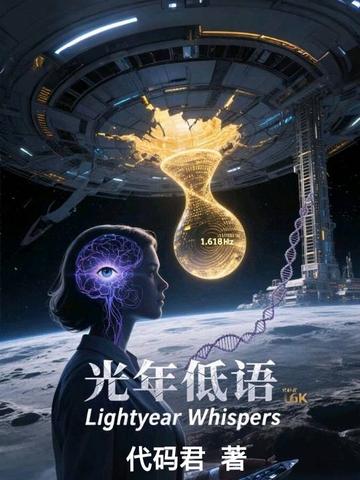
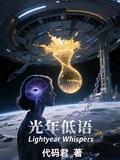
Amid the polarization noise of the Hubble Space Telescope, a death frequency of 1420 MHz tore through the silence of the cosmos. Astrophysicist Lin Hai deciphered an accelerating trajectory in the gravitational waves: some entity was hurtling toward the solar system at 0.03 times the speed of light. When the lab his mentor had burned down revealed a blood-red prime-number code, humanity initiated its last-ditch bid for survival: building a quantum brain computer on the far side of the Moon, powered by energy drawn from devoured planets, and named the Heart of the Ark.
Engineering commander Chen Feng plunged his mechanical prosthetic into a stream of liquid nitrogen, welding shut a crack in the space elevator's foundation amid a hurricane. The nanocable stretched taut, its mournful cry reaching 286 gigapascals, as it formed an umbilical cord between Earth and the Moon. Meanwhile, the probe neuroscientist Alice had driven into her cervical spinal cord sent blood streaming from her nose. In the agony of an overloaded brain-computer interface, she heard the quantum matrix weeping. The Mors code parasitizing it quietly awakened, revealing the interstellar coordinates of an alien trap.
Only when the flames of the lunar rebellion lit up the hexagonal ice-crystal insignia did humanity realize that the most dangerous blade was the technological monument it had forged with its own hands. From antimatter towers rising out of molten lunar soil to gravitational-wave weapons tearing through geosynchronous orbit, salvation and destruction played a double variation across the stars. And the whispers from deep space would ultimately temper the spark that would keep civilization alive.