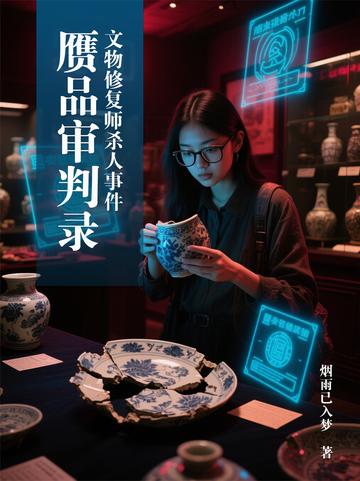
In the restored temple, sin and redemption are intertwined. Genius restorer Shen Chan, who looks indifferent on the surface to repair national treasures, secretly transforms into a "judge of fakes" and uses sophisticated restoration skills to set up a series of killings. She used the acid-etching report as perjury to trap Chen Song, who had betrayed her master, in the deep sea; she injected fatal poison into the cursed bronze sword, making the sanctimonious Director Zhou go crazy in public; and she even used the moth marks as a cover in the interlayer of ancient books to write heinous evidence. All she did was to track down the truth behind her friend Ye Zhenzhen's mysterious death in the line of duty - the navel nail key embedded in Ye Zhenzhen's body pointed to a large and dark transnational cultural relics smuggling and money laundering group "Qingjimen".
Criminal investigation consultant Lu Chenzhou was ordered to pursue the murderer, but he fell into deeper confusion. Every step of Shen Chan's revenge goes straight to the core of Ye Zhenzhen's case, and every killing exposes the shady secrets of the "Qingji Sect" umbrella. The two confront each other in deception and temptation: Shen Chan uses lip-reading skills to gain insight into secrets, while Lu Chenzhou looks for flaws from rust marks, fingerprints, and magnetic interference. The death of Chen Song, the assassination of Director Zhou, and the death of Lin Yazhi, the restorer of ancient books... The murders are intertwined and ultimately point to a mysterious Western Zhou bronze animal head that symbolizes the "restart of the trial."
When the pupils of the beast's head projected the image of Ye Zhenzhen's death, when Shen Chan burned the evidence and said "the truth corrodes more easily than bronze", when Lu Chenzhou picked up the mint box engraved with "I would like to use my blood to forge a new blade", a trial that used cultural relics as weapons and life as a bet began...