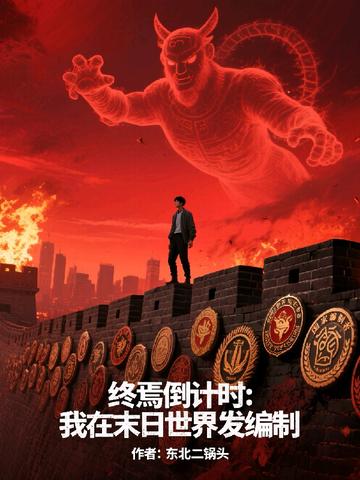
At the moment when the blood moon hung in the sky, Lin Shen, the director of the Organization Department, was working overtime in front of the mountains of files. The screams coming from outside the window tore apart the calm - the skin of pedestrians was chapped into gray scales, and the glass curtain wall of the office building was hit by aberrations with cobweb cracks.
When his fingertips touched the ancestral bronze seal, a cold mechanical voice sounded in his mind: "The establishment system is activated, and 73 survivors have been detected who can be registered."
He discovered that he could "issue equipment" to survivors: surgeons obtained "medical equipment", and the green light emerging from their palms could suture mutated wounds; veterans activated "combat equipment", and their muscle lines burst out with the power to tear steel plates; middle school teachers unlocked "educational equipment", and their voices could soothe out-of-control panic.
But this is not the beginning of redemption.
When Lin Shen used the "administrative establishment" to delineate the safe zone and the "infrastructure establishment" to build defenses, forces coveting the system followed one after another: the final arbiter in a white robe used the "theocratic establishment" to confuse people's hearts; the city-state alliance entrenched in the ruins relied on robbing the organizers to establish a bloody order.
What's even weirder is that the compilers began to have memory disorders - some said they had seen a mirror city, and some saw a countdown code on the system interface. When the lines of the bronze seal overlapped with the inscriptions on the bronze tripod in the museum, Lin Shen finally realized that what he was giving was not the right to survive, but an anchor to maintain the balance between the two worlds.