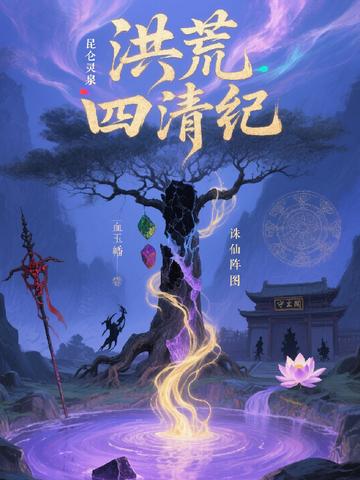
When Pangu split the heavens from the earth, his primordial spirit divided into four. In the primordial world, where there should have been only the Three Pure Ones, another strand emerged, carrying the Dao of “Guarding”: Lingjun.
Sharing the same origin as Laozi, Yuanshi, and Tongtian, he was known alongside them as one of the “Four Pure Ones.” Yet their Daos differed, leading each down a very different path.
Laozi upheld “inaction,” using the Taiji Diagram to stabilize the primordial world’s fortune; Yuanshi followed the Dao of “Creation,” relying on the Pangu Banner to establish order between heaven and earth; Tongtian championed “inclusiveness,” forging the Immortal-Slaying Formation to gather the myriad laws into one flow. As for Lingjun, he commanded the ley lines of the primordial world and bore Pangu’s legacy with a lotus seed seal, guarding the foundations of all things.
From the aftermath of the Dragon-Han calamity, to the bloody struggle between the Wu and the demons, to the schism between the Chan and Jie schools, and the shifting fortunes of the Investiture of the Gods calamity...
Only when Laozi’s “inaction” concealed a calculated balance, Yuanshi’s “orthodoxy” became an obsession, and Tongtian’s “inclusiveness” brought disaster did Lingjun finally understand: “Guarding” was never about waiting in silence. It meant taking the ley lines as one’s bones and the primordial spirit as one’s blood, holding up the last spark of life in the primordial world as it teetered on the brink of collapse.
Born of the same origin, they were destined to struggle over their Daos. Bound by blood, could they unite for the sake of righteousness?
See how the Four Pure Ones stand together in the primordial world and, amid the contest between guarding and creation, acceptance and rejection, find a path to enlightenment unlike any that came before.