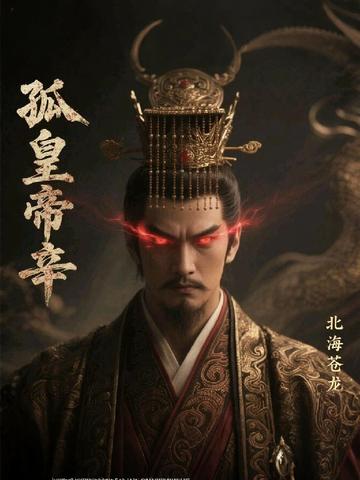
Emperor Xin worked very hard on important military and state affairs, and eventually became ill from overwork and slept for three days and three nights. In a trance, a dream lasted for more than a thousand years, and I saw the rise and fall of later generations, and the cycle of chaos and chaos. When he woke up from his dream, the emperor's eyes had condensed the vicissitudes of the past, and he decided to reform the old and make new things: abolishing the rituals of sacrifice, breaking the shackles of hereditary nobles, promoting hundreds of cultural schools, promoting common people's talents in the streets, determining the rank of rank and salary based on military merit, and completely breaking down class barriers.
He took the military strategies of later generations as his classics and advanced skills and culture as his latitude, reshaped the court mechanism, rectified military armaments, and made the Yin and Shang national power more prosperous. Internally, he used thunderous means to rectify the princes: he might use alienation strategies to divide their power, or he could use the power of the king's army to attack the disloyal ministers, and finally the guests from all over the world would be subdued and the government orders would be unified.
Then he marched thousands of miles to open up new territory: attack the Hunzhou in the north, conquer the Baiyue in the south, conquer the Rong in the west, frighten the barbarians in the east, and reach the hinterland of Asia and Europe wherever the iron cavalry goes, establishing an unprecedented territory. They also sent their fleets to explore the vast seas, conduct trade with foreign lands, migrate people to new lands, and integrate all ethnic groups into one family. This eventually led to an unprecedented unified pattern and spread Chinese civilization far and wide.