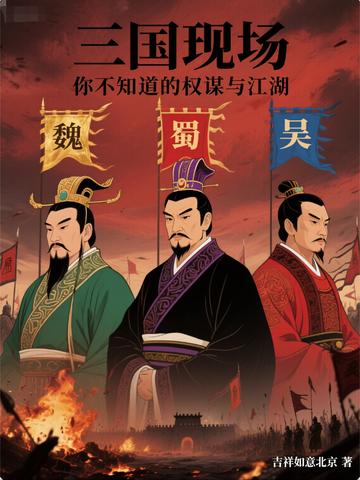
This is not a book that tells history with a straight face.
When you open it, you will find that the Three Kingdoms is not just about the battlefields of war and unfathomable machinations - Cao Cao actually loved to write poems and always laughed out loud after losing a battle; Liu Bei's tears hide a calculation that is heavier than the country; behind Zhuge Liang's "magic calculation" is the seriousness of turning over the map; even Guan Yu reads "Spring and Autumn" at night, and may be wondering whether he should show off to Mi Fang tomorrow.
From the moment Zhang Jiao shouted "The sky is dead", this troubled world has become a testing ground for human nature: some people use loyalty to bet on tomorrow, and some people use betrayal as a springboard; wise men draw the world in their thatched cottages, and reckless men decide life and death with their blood in front of the battlefield. There are no absolute good or bad people here, only a group of people who are desperately swimming forward in the torrent of the times - they will make mistakes, be afraid, and think of the old mother in their hometown late at night, but at the critical moment, they will carve their names into the bones of history.
Read it and you will understand: The reason why the Three Kingdoms fascinates people is not because of the miraculous stories, but because each hero is full of fireworks and takes his own embarrassing and dazzling step on the chessboard of destiny.
The content is very exciting, very satisfied