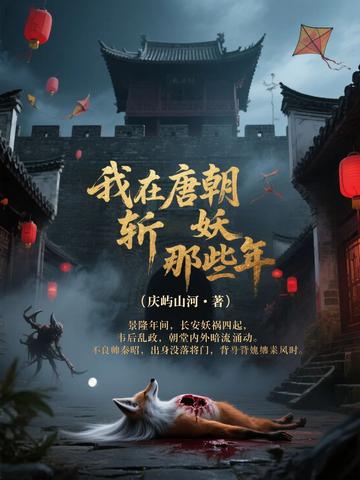
During Those Years When I Was Slaying Demons in the Tang Dynasty
我在唐朝斩妖那些年
- Status
- Completed
- Length
- 818k Words
- Genre
- Eastern Fantasy
- Subgenre
- Eastern Cultivation
- Audience
- Male
- Updated
- 8mo ago
- Source
- Fanqie
Stats
2Reads
6.8Score
270Chapters
528Reads · all time
The three realms of humans, demons, and immortals are clearly structured, and the power system (martial arts, sorcery, and immortality) is rigorously set, making it very interesting to read.
The seed originated from a "gilt iron core copper dragon" from the Tang Dynasty that I first saw at the Shaanxi History Museum - the dragon's body was wrapped with spell-like patterns, and the commentator mentioned that "alchemists emerged in large numbers during the Xuanzong period." At that moment, I suddenly realized: Under the light of the prosperous Tang Dynasty, there may be another dark side that has been erased from the history books. When I first conceived it, I wanted to write a story that was different from the traditional fairy tale. What if the monsters recorded in "Youyang Zazu" are all true? What if there really is a supernatural force behind "Queen Wei's chaos"? So I spent some time researching historical materials from the Jinglong period, and found that the timeline of events such as Zhongzong's sudden death and Princess Taiping's rebellion actually fit perfectly with the blood moon cycle. This coincidence of history and fantasy convinced me that this subject matter is worthy of further exploration. The portrayal of the protagonist Qin Zhao is full of contradictions. He is not like a typical male protagonist of a cool novel - he constantly doubts himself due to the demon blood in his body, and because of the sacrifice of Fairy Jinghua, he begins to reflect on the prejudice that "those who are not of my race must have different hearts." When writing about the master-servant relationship between him and Feiyan, I often thought of those fox girls in "Liao Zhai" who repaid their kindness, but I deliberately avoided romanticizing it: behind the heroism of the Duotail Savior is the history of blood and tears of the demon clan being enslaved for thousands of years. The most difficult thing is to write the setting of the fairy world. It must not only have the majesty of "the ruthless nature of heaven", but also make Jinghua's behavior of defying heaven's rules reasonable. The work is essentially a love letter and inquiry to the prosperous Tang Dynasty. When you read in the final chapter that thousands of lanterns fly together during the Lantern Festival, and the lamps not only have the names of the monsters who died in vain, but also reflect Li Longji's shadowy plot, you will understand: the so-called demon Tang is just a mirror of the human world.
Li Longji ascended the throne in the afterglow of the blood moon, and the ending of Qin Zhao half-demon hiding in the shadows is meaningful. The historical figures complete their missions, the protagonist's choice to retreat behind the scenes, the balanced treatment of the two-line endings, the open ending leaving room for the reader's imagination, and the dialectics of endings and beginnings.
The ending of Jinghua's attempt to mend the cracks in the demon world and her Qingshuang sword transforming into light rain is poignant. The completion of the fairy's final sacrifice, the strong sense of ritual of the military liberation, the beautiful and sad image of light and rain, the reenactment of the myth of mending the sky and saving the world, and the tragic conclusion of the character's arc
The discovery of the jade-faced fox's boudoir containing Qin Zhao's swaddling clothes and his mother's hairpin was shocking. The appearance of personal items creates identity suspense, the sentimental value of swaddling clothes and hairpins, the complex motives behind the collection of fox monsters, and new clues to family mysteries. This discovery overturns many assumptions.
When Kyoka was demoted, the image of a tear turning into a seal of demon eyes was beautiful, and the tragedy of the fallen immortal coexisted with the gift. The poetry of the tear-turned-seal, the depth of the protective intention, and the practicality of the parting gift. This detail transforms sadness into protection, and the emotional expression is implicit and powerful.
Feiyan was bloodletted to activate the altar, and Li Longji suddenly appeared and volunteered to be a substitute. The turning point was touching. An alternative to the royal bloodline, Li Longji's sacrificial spirit shows the responsibility of a wise king, the symbolic significance of the substitute sacrifice is strong, and the heroic behavior of historical figures at critical moments is moving.
Jinghua loses her mana and has a high fever. Qin Zhao hunts monsters to obtain bile and medicine and takes care of her heart-warmingly. The display of the fairy's fragility, the reversal of the protagonist's caring responsibilities, the practicality of the demon hunting medicine, the interdependence in dilemma, and the deepening of feelings in daily care
The scene when the jade-faced fox appears with its nine tails complete and a giant fox claw stretches out from the Chang'an underground is magnificent. The visual shock of the ultimate form, the unexpectedness of the underground attack, the full power of the Nine-Tails, the epic scale of the scene, and the enlarged stage of the BOSS battle
The remnant soul of Fei Yan leads the way to find the fragments of the Sky Mending Stone, which can repair the cracks in the demon world. The poetry of the guidance of the remnant soul, the mythical echo of the Sky Mending Stone, the hope of possible restoration, and the continued contribution of the victims, this discovery provides the key to the final solution.
The truth about the contract between the Jade-faced Fox and Nuwa is revealed to be a scam. The reversal of the truth is shocking, and the falsity of the ancient agreement is revealed. The unreliability of the mythical narrative, the conspiratorial nature of the contract scam, the overturning of historical perceptions, and the reinterpretation of the villain's motivations. This revelation changes the nature of the entire conflict.
The setting background is amazing. The chaotic period of the Wei Dynasty during the decline of the Tang Dynasty and the rampant demon worship are perfectly combined, and the sense of history and fantasy are full.
The detail of discovering that the hair hidden in the broken blade before the Kyoka Soldier was able to restrain the backlash of the demonic energy was touching. The discovery of the function of relics, the symbolic meaning of hair, the practicality of restraining backlash, and the fairy's continued protection, these details make parting less desperate.
Qin Zhao combined the power of immortals and monsters to cut off fate, and the display of the ultimate secret of the blood blade was spectacular. The symbolic meaning of power fusion, the philosophical height of cutting off cause and effect, the naming of the ultimate move matching its effect, and the themes of fatalism and free will reach a climax here.
The evil thoughts clone devoured the real body and turned into a black fairy, summoning the Nine Nether Yin Soldiers to turn into darkness. The birth of the Dark Mirror Flower, the tragedy of the clone's backlash, the terror of the Nine Nether Yin Soldiers, and the fall of the power of the fairy world. This turning point complicates the balance of power between the two sides in the final battle.
The ending of Jinghua's life-long cultivation transforming into rain to purify Chang'an and kissing her goodbye before her soul dies is poignant. The image of purification by rain, the ultimate price of losing one's soul, the affectionate farewell kiss, the complete ending of the fairy arc, this ending is full of tragic beauty.
The opening is stunning, with the weird moon-worshipping corpse in the Suzaku Street Murder Case instantly setting the tone of suspense. The setting of monsters roaming the court perfectly grafts history and fantasy, making people immediately want to explore the relationship between Queen Wei's sachet and fox fur. Qin Zhao is the descendant of a fallen general but serves as a bad commander. The scar on his left cheek hints at past tragedies. This complex protagonist who is both good and evil is very attractive.
The discovery of a bone monument in front of the tomb made of the bones of Qin family ancestors was horrifying, revealing the dark side of the family history. The use of ancestor bones is shocking, the irony of the warning monument, the deep connection between the family and the seal, and the embodiment of historical guilt. This setting deepens the depth of the theme.
It is shocking to discover that the imprisoned clone of Kyoka with evil thoughts is the real driving force behind the scenes. The introduction of the doppelgänger setting, the philosophical discussion of the integration of good and evil, the unexpected identity of the mastermind behind the scenes, and the reveal of the dark side of the fairy. This twist complicates the relationship between the characters.
Historical figures (Li Longji, Queen Wei, etc.) Are intertwined with fictional characters (Qin Zhao, Jinghua), and the interaction is wonderful [Love] [Like]
The mystery of life experience is a big hook throughout the whole story. The feud between the Qin family and Xuanyuan Tomb makes people look forward to the reveal. The semi-demon setting is the highlight. Power and loss of control coexist, adding to the complexity and attraction of the character.
The feud between the "Demon Slayer" bloodline and the demon world provides a solid foundation for the protagonist's growth and conflicts.
Shangyuanjie discovered that the reincarnated Feiyan could understand demonic lantern riddles to prove his identity. With the festive atmosphere, the natural display of abilities, the clues for identity confirmation, and the use of cultural details, this scene advances the main line in joy.
The scene of Qin Zhao's physical body breaking into Tianque and having his bones cracked by the power of Heaven was tragic. His determination to save Jinghua at all costs was touching. The courage to break into the fairy world, the test of physical limits, the concrete description of Tianwei, the protagonist's price is intuitively displayed, and the emotional driving force is strong
Witnessing the punishment of Jinghua being pierced through Pipa's bones by nine mysterious iron chains was shocking, and the image of the sea of clouds dyed red with immortal blood was poignant and beautiful. The cruelty of the punishment in the fairy world is intuitive, the scene of the fairy's suffering is unbearable to look at, the visual impact of the sea of clouds dyed red is strong, and the urgency of rescue reaches its peak.
In order to pass the final level, he must break the blood blade with his own hands to release the sword spirit. The trial of sacrifice is decisive. The courage to give up weapons, the liberating significance of releasing the sword spirit, the symbol of ultimate sacrifice, the philosophical height of giving up the trial, this choice reflects the growth beyond persistence
Jinghua reveals the truth from thirty years ago. The reversal of Qin Zhao's father's death is actually the incarnation of his senior sister. The subversion of the historical truth, the tragedy of the senior sister's death, this revelation connects personal grudges with a larger conspiracy, and the sacrifices and deceptions within the fairy world show the complexity of the world
The girl's demonic transformation process after being exposed to the fox demon inner elixir and growing fluffy ears shows her bloodline. The reaction triggered by the inner elixir, the description of body changes, the manifestation of bloodline power, the hope of controllable demonization, this transformation shows new possibilities
The setting mentions the iron law of "non-interference" in the fairy world, but Fairy Jinghua frequently takes action. There must be foreshadowing in this line [smirk][laugh][what]
Fall into a fantasy and witness the cruel truth about the origin of the first generation of demon-slayers who forged swords with the blood and bones of their wives and children. The tragic origin of the Blood Blade, the moral cost of sacrificing the family, the dark history of the birth of the weapon, and the heavy origin of the fate of the demon-slayer. This revelation complicates the symbolic meaning of the Blood Blade.