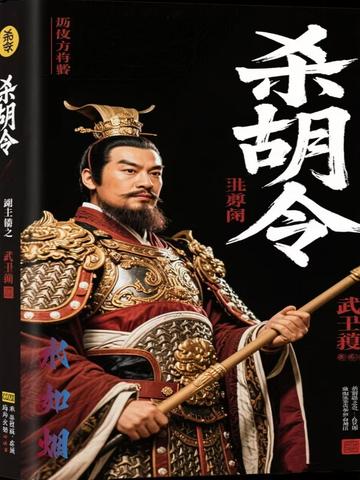
As the son of General Ran Liang of Later Zhao, Ran Min grew up under the rule of the Jie tribe. He witnessed the tyranny of the Hu people and the suffering of the Han people, and the seeds of resistance were planted in his heart. When he was six years old, he was adopted by Shi Hu as his adopted grandson because his father died in the war. He grew up in contradictions.
Ran Min rose to prominence in the Shihu Army with his extraordinary martial arts and military talents. He made many military exploits but always cared about the Han people. Secretly protecting the Han people, the conflicts with the Hu aristocrats such as Prince Shi Sui and powerful minister Zhang Bao deepened day by day.
After Shi Hu's death, Hou Zhao fell into civil strife. Ran Min gradually gained military power during the political struggle. Faced with the suspicion of the new king Shi Shi and the exclusion of the Hu nobles, he began to secretly plan a resistance.
In 350 AD, Ran Min promulgated the "Killing Hu Order" that shocked history, calling on the Han people to resist the oppression of the Hu people. Yecheng changed overnight, Ran Min established the Ran Wei regime and started the Han resistance movement.
Faced with the siege of the Hu tribe from all directions, Ran Min led his army to win consecutive battles, showing his astonishing military talent. In the Battle of Mianshui, he defeated the Qiang Yao Xiang and consolidated the new political power.
Murong Jun of the former Yan Dynasty united various forces to besiege Ran Wei. Although Ran Min was invincible on the battlefield, he gradually fell into trouble due to the disparity in national power and internal rebellion. In 352 AD, Ran Min was captured due to a horse error in the final battle. Faced with Murong Jun's interrogation, Ran Min made an impassioned speech and died heroically. However, his spirit has become an eternal symbol of the Han nation's resistance to foreign aggression.