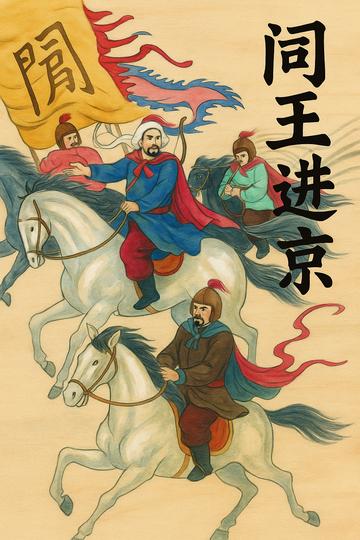
At the end of the Ming Dynasty, the world was in chaos, the government was corrupt, levies and taxes were as heavy as a mountain, and natural and man-made disasters came one after another. The common people are in dire straits, and heroes rise together. In these turbulent years, a name emerged from the northwest and swept across the Central Plains like wind and clouds - he was Li Zicheng, known as the "King of Chuang" in the world. A historical novel with the main line of Li Zicheng leading a peasant uprising army to march into Beijing and overthrow the rule of the Ming Dynasty. The structure is grand and majestic. The work focuses on Li Zi as the central figure, and details his rise from a rebel general to a generational hero. It also depicts the fate and portrait style of many historical figures such as Li Yan, Hong Niangzi, Liu Zongmin, Niu Jinxing, Song Xiance, etc. The novel not only shows the cruelty of war and the battle of intrigues, but also deeply describes deep human conflicts such as loyalty, sacrifice, ideals and betrayal. The story begins with the rise of the northwest uprising army. It tells that Li Zicheng took charge of the army after the death of Gao Yingxiang, united heroes from all walks of life, and invaded Shanxi from Shaanxi, winning consecutive battles and victories. Li Yan outsmarted Linjin, and the elders of Puzhou rushed forward, and the people's wishes were followed along the way; Niu Jinxing offered suggestions for the country, and Song Xiance set the destiny with astrology. All the generals stood side by side, and the momentum was as strong as a broken bamboo. The red lady is a woman as good as a man, and possesses both friendship and friendship, which adds a unique and heroic appearance to this book. In the end, Li Zicheng came to the city with thunderous troops, pointed directly at the capital, and wrote the most thrilling chapter before the demise of the Ming Dynasty. It pays attention to the inner description of the characters and the creation of the atmosphere of the times. The language is popular and elegant, and the structure is rigorous and thick. It integrates literary imagination on the basis of respecting historical facts, so that history is no longer cold, but vivid and full of emotions. It is a high-quality epic that reproduces the magnificent picture of the end of the Ming Dynasty and the peasant war.