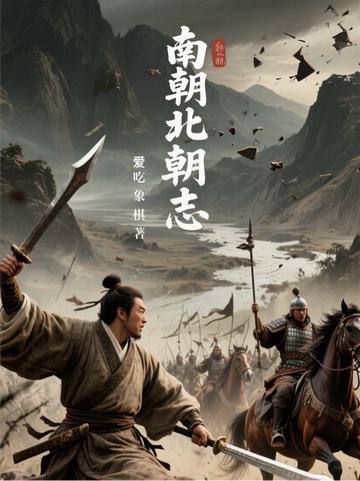
During the Yongjia Rebellion in the Western Jin Dynasty, the Central Plains was shaken, and the Huns' cavalry crushed the gold powder of Luoyang. Taifu Wang Yan surrendered with blood, Huan Xuan defended his master with death, and the Marquis of Gudu pierced his chest with an iron spear, playing a tragic song in troubled times.
Sima Rui and Wang Dao from the east of the Yangtze River faced danger and planned a situation. They gathered the refugees, united the gentry clan, and Feng Zhengshuo, hoping to half-support the Han family's image. In the north, Shi Le, Murong Xin and other Hu heroes joined forces to fight for supremacy among the iron horses and scimitars, tearing apart the mountains and rivers of the Central Plains.
From the smoke of willows in Jiankang to the wind and sand in Bingzhou, from Jiangzuo Yiguan's forbearing plan to the bloody conquest of Hu Qi outside the Great Wall, the strife of clans, the game of noble families, and the blending of Hu and Han formed a grand scroll that spanned a hundred years. Jin Ge and Qing Tan collided, iron hoofs clashed with poetry and wine, and various forces competed on the chessboard where the North and South confronted each other. Some people burned their whole lives to regain Luoyang, some used the power of heroes in troubled times to stir up the world, and some looked for a glimmer of unification in the division.
This is the struggle of the Han family to survive, the localization game of the Hu regime, and the epic story of the nirvana of the entire Chinese civilization in the process of tearing and integration. Let's look at the storm between the North and the South, who can end this century-old chaos, and who will define a new world order, all in the alternation of bloody dawn and dusk in the Northern and Southern Dynasties.