Ling Wan, a medical girl from a poor family, medical spiritual veins and nine-turn resurrecting needle, "benevolent heart and proof": from scapegoating the prisoner (betrayed by her fiancé) to breaking through the divine realm with medical knowledge and creating the "revival of living beings" technique.
Xiao Jiyue, a descendant of the former Qin Emperor, Qin Soul·Seven-Xian Killing Formation "Hegemonic Corpse Killing": Carrying the mission of restoring the country, she went from an orphan girl to the leader of Qin City. When killing three corpses, she discovered the royal family's conspiracy to steal Hongmeng Purple Energy.
Reader comments
Although "Dao Qiong Qin Xin" grew up in the soil of today's Internet literature, its compact rhythm and dense plot conflicts are naturally in line with the characteristics of popular and refreshing literature. The "Changning" in the book is not a natural peaceful time, but an ending won with will, strength and even sacrifice. The author also devotes great efforts to the integration of piano skills and swordsmanship - not simply making the protagonist a wizard who is good at both, but deeply exploring the similarities and contradictions between the two at their original level. When the killing sword energy is poured into the flexible strings, or when the lingering and leisurely tune turns into a deadly invisible blade, this design not only brings a new sensory shock, but also expands the traditional expression form of the "qin" element.
The title of "The Heart of the Piano: Cold Blade Shines on Changning" is already a miniature poetic metaphor. It tells the entanglement between the piano and the sword, and the gaze between the Taoist heart and the world. Even if the light of idealism will be ruthlessly obscured in the dust of the world, the bloodstains of hatred, and the entanglement of mundane affairs, the attempt to protect the "eternal peace" in the heart with tenacity and the heart of the piano to reflect the cold and cold blade itself contains a romantic power that directly touches the heart. For those readers who are looking for excitement beyond simple victory and defeat, and who are eager to feel the excitement of their spiritual core, this novel is undoubtedly a voice worth noting.
When ideals are stained with blood in reality, those Taoist hearts that refuse to be extinguished are exactly the bright moon in the sky that we don't want to give up.
When I first heard the name of the book "Dao Qiong Qin Xin: Cold Blade Shines on Changning", I was immediately struck by its elegance and ancient connotations. It paradoxically combines the ethereal loftiness of "Dao Qiong", the elegance and detachment of "Qin Xin" and the fierce and murderous aura of "Cold Blade", and ends with the peace and stability that "Chang Ning" longed for in that life. This work cleverly integrates the elements of Xianxia with the grievances and grievances of Jianghu. In the current trend of Shuangwen, it still follows the core spirit of some traditional martial arts and Xianxia - an idealist's struggle with choices, and the path of self-salvation of a person who enters Taoism through martial arts.
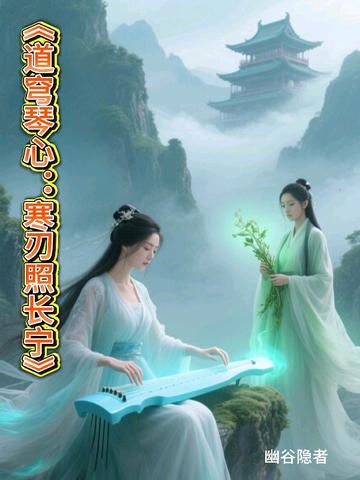
Although "Dao Qiong Qin Xin" grew up in the soil of today's Internet literature, its compact rhythm and dense plot conflicts are naturally in line with the characteristics of popular and refreshing literature. The "Changning" in the book is not a natural peaceful time, but an ending won with will, strength and even sacrifice. The author also devotes great efforts to the integration of piano skills and swordsmanship - not simply making the protagonist a wizard who is good at both, but deeply exploring the similarities and contradictions between the two at their original level. When the killing sword energy is poured into the flexible strings, or when the lingering and leisurely tune turns into a deadly invisible blade, this design not only brings a new sensory shock, but also expands the traditional expression form of the "qin" element.
The title of "The Heart of the Piano: Cold Blade Shines on Changning" is already a miniature poetic metaphor. It tells the entanglement between the piano and the sword, and the gaze between the Taoist heart and the world. Even if the light of idealism will be ruthlessly obscured in the dust of the world, the bloodstains of hatred, and the entanglement of mundane affairs, the attempt to protect the "eternal peace" in the heart with tenacity and the heart of the piano to reflect the cold and cold blade itself contains a romantic power that directly touches the heart. For those readers who are looking for excitement beyond simple victory and defeat, and who are eager to feel the excitement of their spiritual core, this novel is undoubtedly a voice worth noting. When ideals are stained with blood in reality, those Taoist hearts that refuse to be extinguished are exactly the bright moon in the sky that we don't want to give up.
When I first heard the name of the book "Dao Qiong Qin Xin: Cold Blade Shines on Changning", I was immediately struck by its elegance and ancient connotations. It paradoxically combines the ethereal loftiness of "Dao Qiong", the elegance and detachment of "Qin Xin" and the fierce and murderous aura of "Cold Blade", and ends with the peace and stability that "Chang Ning" longed for in that life. This work cleverly integrates the elements of Xianxia with the grievances and grievances of Jianghu. In the current trend of Shuangwen, it still follows the core spirit of some traditional martial arts and Xianxia - an idealist's struggle with choices, and the path of self-salvation of a person who enters Taoism through martial arts.