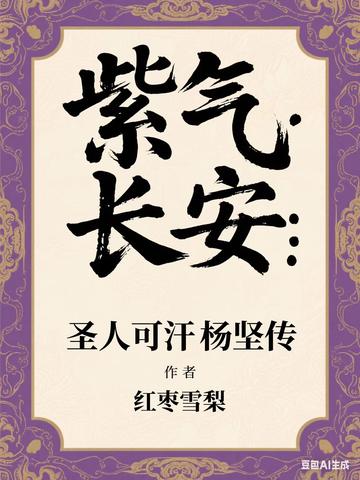
"Purple Air Chang'an: The Biography of the Sage Khan Yang Jian"
A soul-stirring imperial epic, a deep tragedy about power, system and the subtleties of human nature. "Purple Air Chang'an" uses a grand scale to focus in depth on the key giant in Chinese history - Emperor Wen of the Sui Dynasty Yang Jian. The work takes his magnificent life as its axis, piercing through the smoke and dust of history to show how he transformed from a powerful official in troubled times to a "sage khan" who rebuilt China, and how he personally laid the root of the downfall of the empire.
He ended the split, rebuilt the country, ended the era of great split of nearly three hundred years, and opened the glorious chapter of the "Kaihuang Rule".
The founding of the emperor was a monument to the system. The system of three provinces and six ministries laid the prototype of an efficient centralized government. The first-ever imperial examinations opened up a path for advancement for poor scholars. The "Laws of the Founding of the Emperor" "replacing light with heavy ones" demonstrated the progress of the legal system. The land equalization system and the law of losing nationality filled the national treasury, and the Guangtong Canal connected the blood of the world.
The work profoundly analyzes the inevitable alienation of human nature by absolute power. Yang Jian's suspicion in his later years was like a cold knife drawn from its sheath, Shi Wansui, Yu Qingze and other meritorious officials shed blood, and even as loyal as Gao Jiong, he could not escape the tragic fate of being demoted. Dugu Jialuo's "iron-fisted palace" and his preference for his second son Yang Guang became the trigger for the empire's succession crisis.
The climax and final chapter of the novel focus on the "Ren Shou Palace Incident" that changed the fate of the empire. In the suspense and depression of the sudden change on the hospital bed and the sound of the candle shadow and the axe, Yang Jian was shocked to realize the true face of his beloved son Yang Guang, and roared in grief, "Dugu has mistaken me!"
The novel vividly reproduces the history of the founding of the Sui Dynasty, integrating the sense of historical vicissitudes and literary appeal. In the grand narrative of the rise and fall of empires, it explores profound propositions about the nature of power and the rise and fall of history.