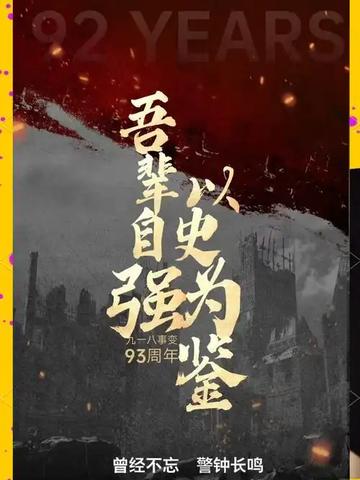
China's Anti-Japanese War was the national liberation war of the Chinese people against Japanese imperialist aggression from 1931 to 1945. It was an important part of the world's anti-fascist war.
After the "September 18th Incident" in 1931, Japan invaded Northeast China and China's local war of resistance began. During the "July 7th Incident" in 1937, Japan launched a full-scale war of aggression against China. The Kuomintang and the Communist Party realized their second cooperation and established the anti-Japanese national united front, and the country entered the stage of the national war of resistance.
During the war, the Chinese army carried out countless heroic resistances, such as the Battle of Songhu, the Battle of Xuzhou, the Battle of Wuhan and other frontal battlefield battles, shattering Japan's delusion of "destroying China in three months"; in the battlefield behind enemy lines, the Chinese army carried out guerrilla warfare, established anti-Japanese base areas, and contained a large number of Japanese troops.
After the Pacific War broke out in 1941, the Chinese battlefield became the main battlefield in the East in the world's anti-fascist war. In August 1945, the United States dropped atomic bombs on Japan, the Soviet Union sent troops to Northeast China, and the Chinese army launched a comprehensive counterattack. On August 15, Japan announced its unconditional surrender and signed a surrender document on September 2.
The victory of the Anti-Japanese War was the first complete victory of the Chinese people against foreign aggression in more than a century. It safeguarded national sovereignty and territorial integrity, promoted national awakening, and made great contributions to the victory of the World Anti-Fascist War.