On the Qin bamboo slips unearthed from the ancient city of Liye, a star map written with modern astronomical coordinates broke the calm of the historical circles. Archaeologist Zhou Mu discovered that these carvings made more than 2,000 years ago not only accurately predicted the lunar eclipse in 2024, but also concealed a recursive structure that could subvert civilization's cognition - at the key nodes of each dynasty, there were abnormal traces consistent with future technology.
When he followed the clues back to Bianjing in the Northern Song Dynasty, a mechanical blueprint composed of the codes of "Along the River During the Qingming Festival" emerged. This ancient painting, thought to depict a bustling city, is actually a design for a space-time machine. The mortise-and-tenon structure of the Hongqiao in the picture is exactly the same as the magnetic confinement device of a contemporary particle collider.
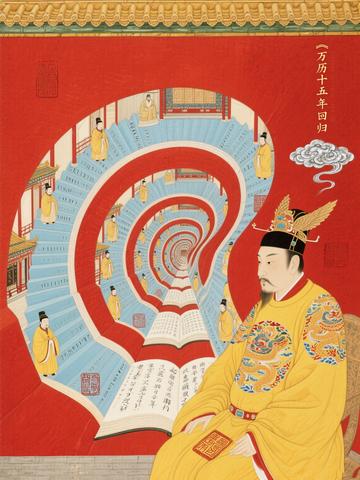
As Zhou Mu found the binary prototype of a quantum computer in Wanli's fifteenth year of life, a shocking conspiracy spanning two thousand years gradually became clear: human civilization may be just a historical simulator set up by a higher-dimensional civilization, and those historical doubts called "coincidences" are exactly the system loopholes in the simulator. When he tried to find the key to shut down the program on the Yin Ruins oracle bones, he found that his name had already been engraved on a tortoise shell three thousand years ago, and there was also a line of warning engraved next to it - "Don't touch the closed loop of time."