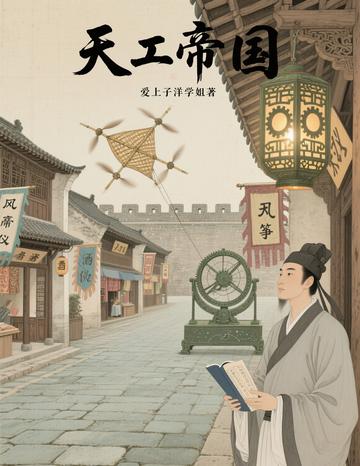
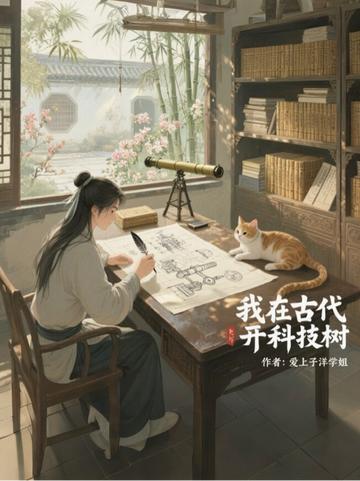
Gu Xing, a top student in the materials science department at Lin'an University, is plunged into an abandoned mine in Wumeng Mountain in the year 1147 during a thunderstorm, becoming the lowest of the low: a “Kunlun slave.”
His only assets are a solar-powered tablet with 18% battery, a 3D printing pen, a 64 GB offline encyclopedia, and an entire undeveloped ancient world. Starting by extracting his first drop of sulfuric acid from green vitriol, he uses primitive blast furnaces to smelt steel, waterwheels to generate electricity, chlorine gas to fight epidemics, and steam-powered ironclads to bombard the Jin navy. With a telegraph network made of copper wire, he controls half of the Southern Song; with silver coins, gunpowder, and railways, he reshapes the wealth of the realm. Caught between “the Mandate of Heaven” and “science,” he gradually crowns himself the Regent King of Heavenly Ingenuity. But when he lights the ten-thousandth electric lamp in Lin'an's imperial palace, he discovers that the real enemy is neither the Jin nor the court, but the desires and backlash brought on by technology itself.
“If the fire of civilization is destined to consume the world, then I will light it with my own hands, and snuff it out with my own hands.”
As the last steam-powered ironclad sails into uncharted waters, Gu Xing engraves all his knowledge onto a silver plate and vanishes into a rift in time and space.
In the Antarctic ice cores of the 21st century, someone excavates a piece of metal etched with a QR code
It bears just one sentence:
“Don't trust Gu Xing.”
Hardcore technology × power struggles × clashing civilizations
The Heavenly Ingenuity Empire: an Industrial Revolution spanning a thousand years, a dark fable about ambition, redemption, and the future.
Good book,,,,,