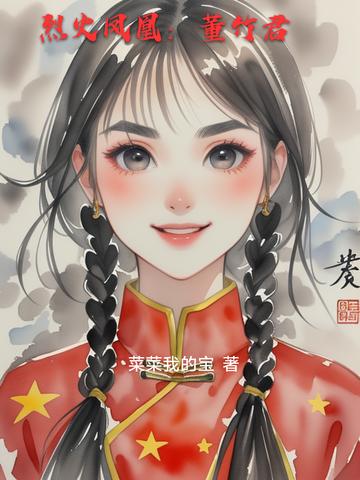
In 1900, Dong Zhujun was born into a lower-class family in Shanghai. His father was a rickshaw driver. When she was 13 years old, she was pawned to a brothel to perform as an entertainer in order to treat her seriously ill father. The turning point of fate occurred at the age of 14, when she met the revolutionary Xia Zhi. With extraordinary courage and determination to maintain her innocence, she escaped from prison with the help of Xia Zhishi, married him at the age of 15, and went to Japan to study, eager to learn new knowledge. After returning to China, she used her wisdom to integrate into her husband's family, but she could not hide the increasingly sharp conflict with Xia Zhishi, who was becoming increasingly conservative in his thinking. Unwilling to rely on others, she founded a women's textile factory and a rickshaw company one after another at the age of 24 to help the poor and disadvantaged. When her marriage was reduced to a prison of mutual oppression, at the age of 29, she decided to go to Shanghai with her four daughters and rebuild the spinning mill from scratch. However, the artillery fire of the "December 28th Incident" devoured her hard work, and the Japanese army arrested her and imprisoned her. She was tortured but remained unyielding. After being released from prison, she resolutely announced her divorce from Xia Zhishi in the newspaper and declared her independence completely. At the age of 35, she founded "Jinjiang Sichuan Restaurant" with a loan of 2,000 yuan, and became famous in Shanghai with her excellent management. Jinjiang is not only a business legend, but also the front line of the secret war against Japan: the teahouse protects progressive young people in passing information, and the revenue is turned into medicine to support the front line. She takes risks to aid and protect patriots. To avoid being hunted, she went into exile in the Philippines for five years and endured many hardships. After the victory of the Anti-Japanese War, he secretly returned to Shanghai, founded an underground printing factory, instigated key figures to rebel, and contributed to liberation. After the founding of the People's Republic of China, at the age of 51, he donated the Jinjiang Hotel to the country free of charge and was re-elected as a member of the Chinese People's Political Consultative Conference. He devoted his life to fighting for women's rights. Even though he was behind bars in turbulent times, his patriotism remained as strong as ever.