The fictional "Dasheng Dynasty" had a prosperous literary style but corrupt imperial examinations. The gentry monopolized the right to speak. It was difficult for literati from poor families to find a way out. The people's desire for "real talent and practical learning" formed a sharp contradiction with the official "formalism".
Su Yan (character: Mingyuan), a graduate student in the Department of Modern History, specializes in classical literature. He is especially good at poetry creation and appreciation. He has a gentle and upright personality. He accidentally came into contact with the "Wen Xing Inkstone" in the museum and traveled to Dasheng. He became a scholar from a poor family in the south of the Yangtze River. He has his own "literary spirit" - his sensitivity to words and rhythm is far beyond ordinary people. The poems he writes can arouse strong resonance among readers (not a superpower, but a natural expression of emotion and talent).
-Su Yan, with the modern outlook on equality and pragmatism, uses poetry as a blade to break down class barriers and protect true feelings and ideals in Dasheng, who values family status and has a frivolous writing style. At the same time, he makes a choice between "sticking to one's heart" and "integrating into the times" to promote the intertwining of changes in writing style and personal destiny.
Reader comments
This novel uses poetry as its bones and true feelings as its flesh. Under the shell of time travel, it tells a story of "protecting ideals with words and illuminating the times with original intentions", allowing readers to appreciate the beauty of classical literature while also experiencing the power of "integrity and perseverance".
Let me tell you a few words again. The original intention of creating "Literary Stars Shine on Kyushu" stems from my obsession with "the power of words". In this fast-paced era, we seem to be accustomed to fragmented expressions, and have gradually forgotten how poetry once carried the joys and sorrows of a nation, and how pen and ink can rewrite an individual's destiny. So, I wanted to write a story about "persisting in telling the truth" - Su Yan's poems are not a golden weapon, but they can make the powerful tremble; his inkstone is not a magic weapon, but it can shine a light on people's hearts. If you were touched by the sentence "Don't borrow half of your light from rich families" in "Spring Thoughts in the South of the Yangtze River", or your eyes were warmed by the simple voice of the peasant woman in "The Ballad of the Spinning Wheel", that is the greatest significance of this story. Every character in the book, whether it is the stuttering but tenacious Chen Zimo, Lin Qingwan who breaks free from the shackles of his family background, or even Su Bingde who finally learns to reconcile, is trying to answer a question: "When the world is full of injustice, how should we live...?"
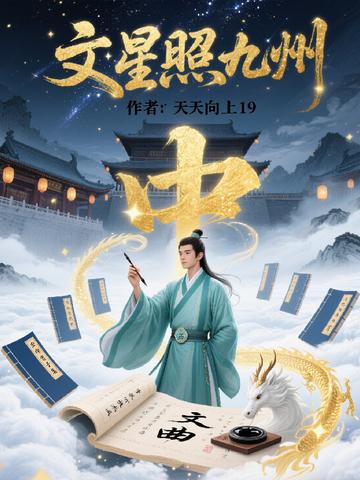
This novel uses poetry as its bones and true feelings as its flesh. Under the shell of time travel, it tells a story of "protecting ideals with words and illuminating the times with original intentions", allowing readers to appreciate the beauty of classical literature while also experiencing the power of "integrity and perseverance". Let me tell you a few words again. The original intention of creating "Literary Stars Shine on Kyushu" stems from my obsession with "the power of words". In this fast-paced era, we seem to be accustomed to fragmented expressions, and have gradually forgotten how poetry once carried the joys and sorrows of a nation, and how pen and ink can rewrite an individual's destiny. So, I wanted to write a story about "persisting in telling the truth" - Su Yan's poems are not a golden weapon, but they can make the powerful tremble; his inkstone is not a magic weapon, but it can shine a light on people's hearts. If you were touched by the sentence "Don't borrow half of your light from rich families" in "Spring Thoughts in the South of the Yangtze River", or your eyes were warmed by the simple voice of the peasant woman in "The Ballad of the Spinning Wheel", that is the greatest significance of this story. Every character in the book, whether it is the stuttering but tenacious Chen Zimo, Lin Qingwan who breaks free from the shackles of his family background, or even Su Bingde who finally learns to reconcile, is trying to answer a question: "When the world is full of injustice, how should we live...?"