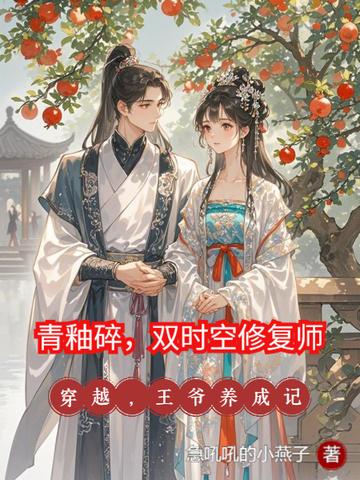
When Celadon Shatters: A Restorer Across Two Timelines
青釉碎,双时空修复师
- Status
- Ongoing
- Length
- 715k Words
- Genre
- Ancient Romance
- Subgenre
- Ancient Romance High-Concept
- Updated
- 8mo ago
- Source
- Fanqie
Synopsis
More by this author




In booklists 6





New Authors Reviewing One Another’s Work
Looking for books like Twin Stars in Ancient Times. It's good, I love it! New authors, let's review each other's books. Tell me when you've read mine, and I'll read yours too.




Let's Help Each Other Out with Our New Books! I'll Review Yours Too
Looking for books similar to "A Sprig of Spring in Bloom". Historical romance preferred. Let’s all review each other’s books!!! I’ll reply within three hours of your comment


Parallel Universes and Transmigration Romance Like Someday or One Day
I really love fantasy romance like this, with transmigration between parallel worlds, where the characters meet and part. Anything along those lines would be great. I hope the recommendations aren't too bland or formulaic. No Mary Sues, please.




Fantasy, Romance, Cultivation, Inspirational Stories, System, Any Genre
Recommend your personal favorite, or, if you’re an author, one of your own books that you think you wrote best.




Any Stories About a Love Across Time?
Something like The Days of Online Dating the Emperor





Every Book Here Is Worth Reading for 5+ Hours
Looking for books similar to The Night Watcher of Miaojiang. Any novel posted here must be worth at least five hours of reading. Include a review and a follow-up request. One book per post; if there are more, I’ll skip it.
Reader comments 54
Translated by Google Translate
Different from the traditional saying of "depending on the male protagonist", Di Pengpeng's growth line is clear and independent. In ancient times, she did not cling to the powerful, and relied on her restoration skills to gain a foothold. In this world, she does not dwell on the past, and relies on her professional abilities to become a top restorer. The setting of "men are not the only ones to rely on" makes her image three-dimensional and vivid. ? Her awakening is reflected in two choices: leaving Lin'an is the reason to recognize reality, and staying in this world is the courage to embrace life. She did not give up herself because of love, but turned her longing into motivation for growth. This image of a woman who "moves forward with regrets" breaks the stereotype of "sacrifice everything for love", which is especially rare in the ancient Tomato saying.
This is definitely a five-star recommended book! It not only has the professional quality of cultural relic restoration, but also has the fantasy romance of traveling through time and space. The plot is ups and downs, and the emotions are delicate and moving. Whether you like cultural relics, time travel stories, or simply want to read a good story, this book will not let you down.
The story is strong and the writing is good. It is not only a good companion on the commute, but also a good way to increase knowledge.
The narrative technique of "Green Glaze Broken" is exquisite. It uses "unreliable narration" to put readers into an emotional trap: Di Pengpeng said that time travel was like a dream, but the touch of the pillow was so real; she said that Shen Yan didn't know where she came from, but how could the artist's sensitivity not detect the abnormality? This ambiguity puts the story somewhere between "Zhuang Zhou's dream of a butterfly" and "real experience". ? The reality of the details further strengthens this illusion: the bluestone road in Lin'an, the lotus pattern on the porcelain pillow, and the egg white glue formula during repair, every detail is tangible and tangible. When readers are convinced by these details, they unconsciously accept the setting of time travel. The open-ended question at the end - "If there were a porcelain pillow, would you dare to sleep on it?" - Allows the emotional aftertaste to continue beyond the pages of the book.
I was very attracted by the setting of dual time and space + porcelain restoration! The heroine traveled between ancient and modern times, pieced together the broken porcelain pieces into a story, and even raised a prince. This dual-line narrative of "restoring cultural relics + repairing love" is amazing. The author writes the details of the porcelain such as glaze color and slice opening in a very visual way, and the interactions between the princes are also sweet but not greasy. 350,000 Words are simply not enough, so I beg for more!
The celadon porcelain pillow of the Song Dynasty hides a secret more precious than the museum collection - this is the most exquisite setting of "Celadon Glaze Broken". In the time travel of modern cultural relic restorer Di Pengpeng, there is no bloody soul possession, only the natural dialogue between time and space flowing in the warm glaze of the porcelain pillow. She taught the down-and-out painter Shen Yan how to identify glazes in Lin'an, and recalled the scent of sweet-scented osmanthus in front of the repair table in this world. The two parallel narrative lines were entangled like a lotus pattern. ? The most touching thing is the double metaphor of "repair": repairing the cracks in the porcelain pillow is to mend the wounds of time; trying to retain ancient love ultimately failed to the fate of "can repair ancient objects, but not old dreams". When she becomes a well-known restorer in this world, every cultural relic becomes a shadow of the old person. The irony of this success is more heartbreaking than parting. The inscription "Peace every year" at the end is a sigh that spans thousands of years and is also a gentle footnote to all regrets.
If you don't know, you will act according to orders. For example, the red on this plate is the place where the flame is "soft", and the copper material slowly oxidizes into red; the purple there is the place where the flame is "strong", and the copper material burns quickly and becomes purple. The key is the word "quickly and slowly" when controlling the fire. Quickly, the color will be darker, and slow, the color will be lighter. Only when the heat is even, the color will spread out like clouds, without hard boundaries. "She deliberately emphasized the word "color" and avoided "copper".
The author seems to be holding a pen dipped in glaze. There is no deliberately exaggerated suspense, and no accumulation of time and space theories. All the ingenuity is hidden in the texture of the matter of "repair" - the astringent feeling of fingertips brushing against the porcelain shards, the similar sound of rain on the eaves in different time and space, and even the shallow shadow cast by the character's eyelashes when he frowns, are all written so that you can touch it at your fingertips. The most touching thing is the temperature behind the delicacy. When the clues of two time and space intersect through a piece of celadon glazed porcelain, there is no fierce conflict. Instead, when the restorer discovers the traces of porcelain repair left by "himself" in another time and space, the resonance across dimensions is like the leaves sinking at the bottom of the cup when the tea cools, light but with a long aftertaste. The author packs the grand proposition of time and space into the softest details, making every crack become a postmark of time.
When you close the book, the most unforgettable thing is not the happy ending, but the unspoken regrets. Shen Yan's hesitant expression at the end, Di Pengpeng's suddenly red eyes when he appeared in the world, and the thousand-year-old "Peace every year" hidden under the pillow, these details constitute the novel's regretful aesthetics. It does not force HE, but uses a "happy ending with a little bit of BE" setting to give love a lingering aftertaste. Just like the opening of celadon porcelain, it looks like cracks, but in fact it is a gift of time. Two people in time and space may not be able to stay together, but the longing has spanned thousands of years and is hidden in the texture of every cultural relic. This kind of "unfinished" love is more unforgettable than the completion of the book. The most unforgettable thing is not the happy ending, but the unspoken regrets. Shen Yan's hesitant expression at the end, Di Pengpeng's suddenly red eyes when he appeared in the world, and the thousand-year-old "Peace every year" hidden under the pillow, these details constitute the novel's regretful aesthetics. It does not force HE, but uses a "happy ending with a little bit of BE" setting to give love a lingering aftertaste. Just like the opening of celadon porcelain, it looks like cracks, but in fact it is a gift of time. Two people in time and space may not be able to stay together, but the longing has spanned thousands of years and is hidden in the texture of every cultural relic. This kind of "unfinished" love is more unforgettable than perfection. .
The annotation "Slightly BE" accurately summarizes the characteristics of this book - its regret is not the separation of life and death, but the eternal miss of "I am stable in this world, and you are waiting in ancient times". Di Pengpeng took the initiative to leave Lin'an, not because he didn't love her, but because he knew that the barriers of time and space could not be broken; Shen Yan's farewell without saying a word was not because of cowardice, but because he understood the meaning of return in her eyes. ? This kind of "sober regret" is the most touching. Just like celadon porcelain, there are always cracks and patterns, and imperfection is the norm. The author did not force perfection, but let this regret settle in time: the porcelain pillows in this world are still warm, the osmanthus in ancient times blooms every year, and people from two time and space live in each other's thoughts. This kind of treatment gives love a heavy texture like a cultural relic.