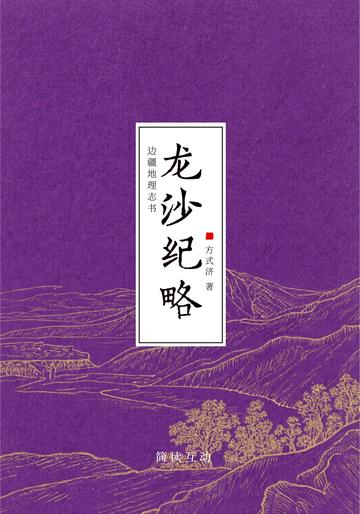
"Longsha Chronicles" is like a documentary manuscript on the frontier in the early Qing Dynasty. The opening chapter takes readers into the vast Heilongjiang River Basin to experience the vivid descriptions of the situation outside the Great Wall and the customs of foreign ethnic groups. The book was written by Fang Ji, a Jinshi in the Qing Dynasty. His family moved to Heilongjiang because his father was involved in a literary inquisition. He experienced life in the border area and condensed what he saw and felt into a text, creating this important Northeastern border document.
The book is divided into nine sections: "Fangyu" summarizes the boundary settings and important places of the Heilongjiang River Basin; "Mountains and Rivers" details the source and landform features of the Ussuri River, Noni River and other rivers; "Economy" records the border official system and garrison distribution; "Customs" "Describes the costumes, wedding customs, hunting and festivals of the Oroqen, Sauron, Dahuli and other ethnic groups; "Seasonal" reflects the rhythm of life in extreme climates; the remaining subjects discuss food, tribute, products and architecture, with rich and detailed content.
The book describes the military and civil affairs settings of important towns such as Bukui and Mergen, records the severe cold scenes in winter when dripping water turns into ice and wind and snow penetrate the bones. It also tells the daily life of border residents who feed on buckwheat, mink skins and fish. Among the tributes, authentic specialties such as mink skins, pearls, flower water, and old gun vegetables were included one by one, which shows the wealth of resources in the border areas.
"Longsha Chronicles" is only 12,000 words long, but it is concise and comprehensive. It almost covers the geography, government affairs, ethnic groups, economy and customs of Heilongjiang in the early Qing Dynasty. It is a rare and important material for studying the historical geography and national life of Northeast China.