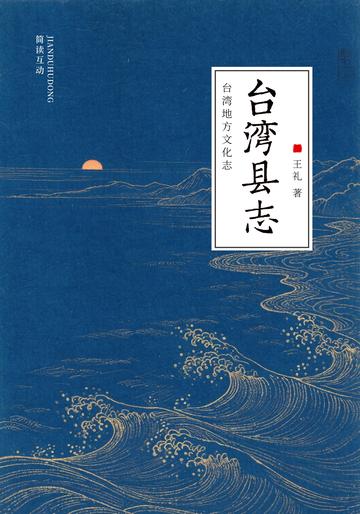
The Taiwan County Gazetteer, completed in 1720 during the fifty-ninth year of the Kangxi reign in the Qing dynasty, is an important local gazetteer. Its compilation was overseen by Wang Li, then assistant intendant for coastal defense and suppression of banditry in Taiwan Prefecture, who also served as magistrate of Taiwan County. The last of the gazetteers for the three counties under Qing rule to be completed, it not only carried on the prefectural gazetteer System but also independently established a framework for documenting governance and culture at the county level. The work comprises ten volumes, with comprehensive content and a rigorous structure.
Wang Li, courtesy name Lishan and literary name Yushan, began organizing the gazetteer bureau in the winter of 1719. He invited local Confucian scholars Chen Wend a, Lin Zhonggui, Li Qinwen, Zhang Shixiang, and others to collaborate on the compilation. The draft was completed in the early summer of the following year, demonstrating his scholarly rigor and skill in compiling gazetteers.
The work is divided into sections, including:
- Geography and administrative divisions, recording the boundaries of Taiwan County, its mountains, rivers and terrain, harbors and tides, bridges and market streets, government offices and schools, waterworks, and distribution of local products;
- Civil and military officials, detailing the establishment of civil and military posts, garrison deployments, forts, and coastal defenses in Penghu;
- Examinations and appointments, ceremonies, and taxes and labor service, covering local examination candidates, sacrificial rites, rents, taxes, corvee labor, and systems affecting people's livelihoods;
- Biographies, collecting accounts of local worthies, filial and righteous people, loyal martyrs, and recluses;
- Miscellaneous records and writings, including descriptions of historic sites, temple legends, colloquial expressions and dialects, and poems and literary works.
The Taiwan County Gazetteer documents not only the geography, administration, and social institutions of Taiwan County in the final years of the Kangxi reign, but also presents an authentic picture of the island's cultural education, customs and etiquette, and grassroots governance. Compiled within a short period and grounded in detailed sources, it laid the groundwork for the structure of the later Continued Taiwan County Gazetteer and Revised Taiwan County Gazetteer. It is an important source for the study of Taiwan's politics, society, and culture in the early Qing period.