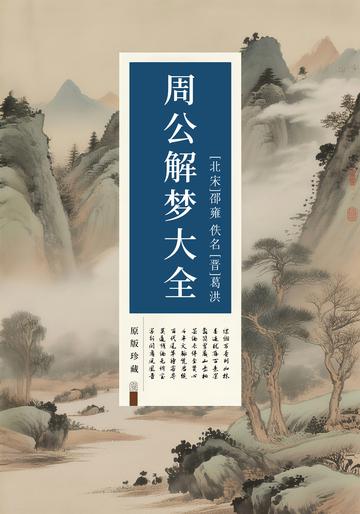
"The Complete Collection of Dream Interpretations by Duke Zhou" is a masterpiece of dream books that have been passed down for thousands of years. The opening chapter is fascinating with a mysterious and profound question: Are visions in dreams inspired by gods, subconscious minds, or signs of good or bad luck? This book extensively collects the experience and concepts of dream interpretation in the past dynasties, with "Zhou Gong's Interpretation of Dreams" as the core, integrating various versions compiled by Shao Yong of the Northern Song Dynasty, Ge Hong of the Jin Dynasty and anonymous descendants.
The book is rich in content and is classified according to the theme of dreams, such as dreaming about the heaven and earth, ghosts and gods, characters, birds and animals, food and drink utensils, weddings and funerals, etc., And analyzes the good or bad fortune and destiny hints that may be contained in them one by one. For example, dreaming about snakes is often interpreted as wealth, and dreaming about flying birds often means freedom or change. They not only interpret Taoist mystical principles, but also incorporate simple folk psychological experience and cultural imagination.
Shao Yong of the Northern Song Dynasty used Yili to coordinate dreams, focusing on the connection between heaven and man, and focusing on the deduction of dreams and fortunes; Ge Hong focused on the connection between dreams and health preservation, cure of diseases, and seeking immortality, reflecting the Taoist color; and anonymous descendants continued to add and annotate, making the book more detailed and easy to understand.
Generally speaking, "The Encyclopedia of Zhou Gong's Interpretations of Dreams" is not only a guide to interpreting dreams, but also a microcosm of ancient people's psychology, culture, and beliefs. It can not only satisfy people's curiosity about the good or bad future, but it is also a cultural treasure house that reflects on people's hearts and various worldly situations. It is still talked about today.