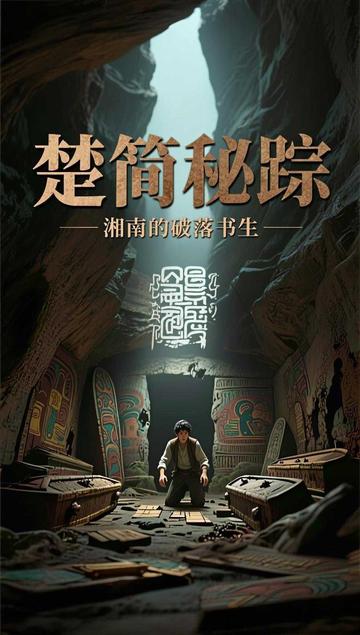
In 1990s Changsha, office worker Chen Ming discovers a secret connection between the Qin tombs in Xianyang and the ancient tomb clusters around Changsha in a company document. The text is like a key, giving his obsession with ancient sacrificial rites a purpose, but it also drags him into a vast conspiracy.
The people around him gradually reveal their true faces. His seemingly friendly colleague Lin Feng is actually an heir to the family entrusted with guarding King Zhuang of Chu’s tomb, and harbors suspicions about him. His childhood friend Li Pangzi possesses the ancestral skills of a tomb raider, and his compass always points to crucial clues. The Xiangxi girl A Man arrives with her sorcery, and the secret beneath her silver bracelet is inextricably entangled with Chen Ming’s research. Their feelings seesaw between exploitation and genuine affection.
Four powers vie for control: the guardian families protect the ancient tombs at all costs, a Nanyang company covets the jade bamboo slips, a Xiangxi sorcerer clan seeks a talisman to break a curse, and an American tech company wants to plunder the secrets with its technology. The connection between four ancient tombs belonging to the Qin, Chu, Lu, and Zhao states conceals two thousand years of enmity. A craftsman surnamed Liu was killed by the master of the Qin tomb, and his son Zhao built a tomb that left behind a warning for civilization.
From the Chu tomb beneath Mawangdui to the celestial mechanisms in the Qin tomb at Xianyang, Chen Ming solves the puzzles using the sacrificial principle of “harmony and union.” Amid suspicion and cooperation, he sees the truth: the jade bamboo slips record no treasure, but rather the secret that “civilization endures through symbiosis.” When the conspirators fall, he and his companions stand before the Chu tomb and finally understand that the puzzles were never a prison. They were meant to help those who understood them discover what it means to protect.



Good, very good, interesting