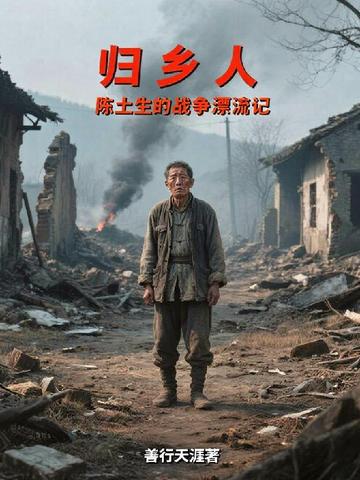
In the cold winter of 1922, Chen Tusheng was born into a poor peasant family in Macheng, northeastern Hubei. In the winter of 1937, a snowstorm claimed the lives of his parents. Chen Tusheng, a fifteen-year-old orphan, struggled to survive for a mouthful of food. He ignorantly followed his fellow villagers and joined the Macheng peasant riots, lifting a heavy spear. The cruel gears of fate thus turned.
He was captured during the encirclement and suppression by the National Army and put on a gray and blue military uniform to survive; in the bloody battlefield of Songhu, he became a prisoner of the Japanese army and was forced to wear a Kwantung Army uniform and witnessed the slaughter of his compatriots in humiliation; during the bloody battle in Taierzhuang, facing the red-eyed National Army bayonets, he knelt down and cried out the original starting point: "I was a Red Army member of the Macheng riot!", Dramatically returning to the ranks of the National Army. The civil war broke out again, and during the artillery fire of the Liaoshen Campaign, he was captured by the four fields. Finally, amid the cries of "Liberate All China", he once again put on the khaki military uniform and became a soldier of the People's Liberation Army.
In 1950, he crossed the Yalu River. The ice and snow of Changjin Lake failed to swallow him up, but he was captured again on a foreign battlefield. After suffering in the Geoje Island prisoner-of-war camp, in 1953, the dust settled in Panmunjom. He finally returned to his hometown of Macheng, where he had been away for nearly twenty years, with scars all over his body and an unspeakable past.
He was captured seven times and changed his flag seven times. The Red Army, the National Army, the Japanese Army, the National Army, the People's Liberation Army, the Volunteer Army, prisoners of war, farmers... His identity is like floating in the wind, repeatedly washed away and reshaped by the torrent of war. He is neither a hero nor a coward, he is just an ordinary person who is caught up in the great wheel of the times and struggles to survive by relying on the most primitive survival instinct. In the 1980s, Sun Tzu opened a history textbook, pointed to the "Great Victory of Taierzhuang" and asked: