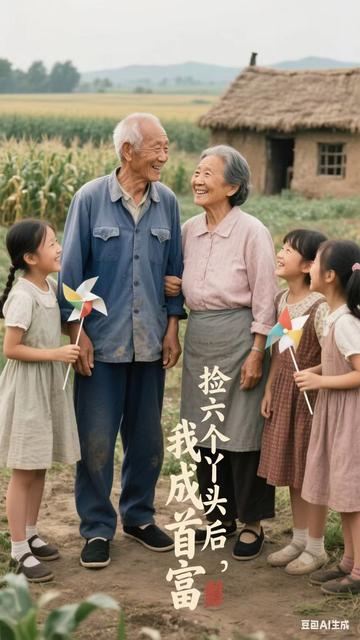
In the northern countryside in the 1970s, the marriage of Li Xingyi, a lame brick kiln worker, and Ye Qianke, a stubborn girl, was labeled as "broken" from the beginning. Lifelong infertility caused by a work-related injury made the young couple live a hard life in a world where sons were valued over daughters.
From 1978 to 1992, they successively picked up six abandoned baby girls - Li Qiulin who was purple from the cold in a wheat straw pile, Wang Luoke who was exchanging rice in a bamboo basket, Pan Yuxin who was holding moldy wotou in a ruined temple, Zhou Wenhong who was exchanging food stamps on the pillar of the supply and marketing cooperative, Deng Huarong who was for sale in the woodshed, and Yang Zi who was begging for a bite of rice on the New Year's Eve threshold.
When the curses of "extreme household" and "nursing home for girls" came over, Li Xingyi used his lame leg to hold up the eaves, and Ye Qianke used a pole to protect the girls. They chewed chaff to send their daughters to school, wrapped their six little bodies in patches, plastered awards on the earthen walls, and trampled gossip under their feet.
From the adobe house to the new building, from being chased to protecting the family, the six girls grew up to be pillars in the prejudice. Many years later, teachers, painters, accountants, dancers, principals, and scholars used their lives to prove that the roots of leaving home have been watered deeper by love than anyone else.