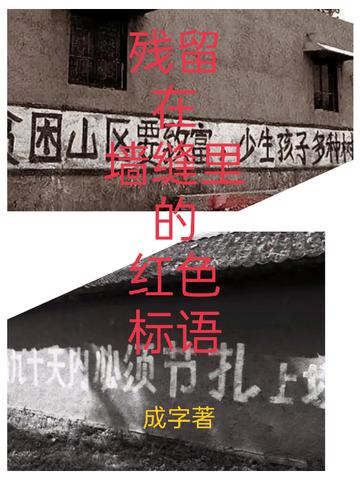
This is a family history hidden in the cracks in the wall, and also a survival epic of a generation of Chinese people.
In Liaocheng County in southern Henan in the 1980s, Wang Jianjun and his wife began to move around due to the family planning policy in order to give birth to a boy. They traveled to abandoned kilns in Anhui and the mountains of Huoqiu County, making a living as coolies on carts, struggling between the slogan "Only one child is good" and the tradition of "more children, more blessings". The birth of their eldest daughter and their second daughter (later renamed Wang Pan) did not diminish their desire for a boy. It was not until their youngest son Shengli was born with the help of mountain people that the family returned home and faced fines and sterilization.
Decades later, Wang Pan recruited his younger brother to become a population policy scholar. He taught in Xinjiang and successfully ran a cooperative in his hometown. The slogans on the old walls changed from "Younger and eugenics" to "Three-child era", and the broken bricks from the kiln, the patched clothes, and the names on the homework books became the annual rings connecting the past and the present.
Looking back at the years of hiding, they finally understood: happiness is the leap from "living" to "living well", and it is the appearance of each generation trying their best to grow in the tide of the times. The slogans on the old wall will fade, but the annual rings under the wall will always record: days are endured, and hope is grown. If you like it, your attention is the motivation for me to write. I will try my best to tell every story!