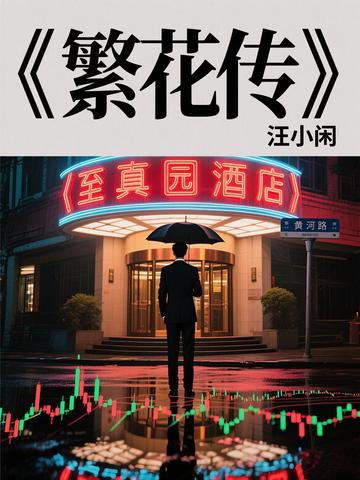
Under the guidance of his old businessman uncle, Abao, a young man from a Shanghai alley, rose to become the upstart "Mr. Bao" on Yellow River Road with the help of stock subscription certificates. He deals with three women with different personalities in the neon-blurred business world: Ms. Wang, a lively and cheerful foreign trade employee, who worked with him to expand his business territory, but fell into a trough due to a conspiracy by his colleagues; Li Li, the mysterious and charming owner of Zhizhenyuan, started a capital game with him, and a fatal passion arose in the hail of bullets; The ups and downs of Wei Hongqing, the little leather prince from Haining, and the life-saving care of Tao Tao, the little leather prince from Haining, intertwined with all the living beings who were the trendsetters of the great era.
Mr. Bao's rise has touched the interests of the "Qilin Club", a capital giant that has been entrenched in Shanghai for many years. Led by Dr. Wu, his subordinates Mei Ruhai, Luo Wenjin, Song Yunhe and other core members with their own unique skills launched an all-round brutal campaign against Mr. Bao and his allies, using everything from malicious short selling in the capital market to offline business strife to public slander. A thrilling business war begins, with friendship, interests, and beliefs colliding fiercely on the banks of the Huangpu River.
Taking Shanghai Beach as a microcosm, the novel depicts a magnificent picture of the ups and downs of personal destiny, the evolution of commercial civilization, and the alternation of old and new forces in the transition period of the great era. Where the "flowers" fall away, it witnesses the spiritual inheritance of immortal ideals and endless life.
Reader comments
"The Story of Flowers" goes beyond the superficial business war and love. "The Story of Flowers" essentially explores how people place their emotions and souls in an era of rapid change. The inseparable relationship between Abao and several women is not a simple polyamorous love, but a symbolic expression of different life choices and value orientations. Everyone is looking for a balance between desire and innocence, reality and ideals. This is the life issue faced by modern people. It goes beyond simple storytelling, but builds an artistic world that is both real and poetic through ultimate aesthetic expression, profound regional cultural display and philosophical emotional discussion, allowing us to think about the deep meaning of the times, cities and life while appreciating the story. The reappearance of Shanghai is not only a restoration of the material level, but also a capture of the spiritual temperament and atmosphere of the times. The hesitation and choice between tradition and modernity, between ideals and reality, between individuals and times, through artistic expression, arouse resonance across the ages.
The novel "The Legend of Flowers" takes Shanghai as the stage and accurately captures the atmosphere of that special era - the market economy has just emerged, the stock market has created countless myths, and everyone is looking for their own position in the wave of the times. Abao's transformation from an ordinary young man to an upstart in the business world is not only a history of personal struggle, but also a microcosm of an era. Those cheers and sighs in front of the stock market quotation board, those opportunities and challenges in foreign trade companies, are the true pulse of the times. "The Legend of Flowers" presents Shanghai's regional culture to an unprecedented depth. From the appropriateness of Wu Nong's soft words to the fireworks of the local restaurant; from the living scenes of Western-style bungalows to the era marks of the Bund architecture, they are all an affectionate tribute to Shanghai-style culture. The characters in the play are shrewd yet dignified in how they deal with things, and the rules and bottom lines in competition are all contemporary interpretations of Shanghai-style cultural spirit.
The most touching thing in the book is the "silent" wisdom. When I was young, I always thought that love and hate should be distinguished, but now I understand that in the adult world, it is decent to see through but not tell, and silence is the armor to withstand the uncertainty of fate. Watching the buildings rise and fall, watching old friends separated, I realized that the blooming flowers are just a passing cloud. Only those moments of struggling to survive in the gaps are the truest background of life. Closing the book, it feels as if a lifetime has passed, and there is only a sense of calm after desolation in my heart.
Behind the title of this book is the sincerity and kindness of everyone. With this original intention, we will move forward more steadily and further at any time!
Many parts are more reasonable than those in movies and TV shows, especially Ms. Wang's
A very good book that truly reproduces the different destinies of various characters in the process of social development.
It makes up for the regrets in the TV series version, and the logic is more complete. Worth watching again
What is at stake in business wars is not capital, but human sophistication.
After watching the TV series and then watching the original work, I felt it was even more interesting. Director Wong Kar-Wai has produced the original work, but it seems that he has not captured the taste of the original work.
It can be a good book
After listening to the book, watch the drama again
The structure is clear, the writing is exquisite, the content is wonderful, not to be missed, it is beautiful to watch
It's wonderful, it restored the ten-mile foreign market in my heart and the old dream in Shanghai
"The Story of Flowers" goes beyond the superficial business war and love. "The Story of Flowers" essentially explores how people place their emotions and souls in an era of rapid change. The inseparable relationship between Abao and several women is not a simple polyamorous love, but a symbolic expression of different life choices and value orientations. Everyone is looking for a balance between desire and innocence, reality and ideals. This is the life issue faced by modern people. It goes beyond simple storytelling, but builds an artistic world that is both real and poetic through ultimate aesthetic expression, profound regional cultural display and philosophical emotional discussion, allowing us to think about the deep meaning of the times, cities and life while appreciating the story. The reappearance of Shanghai is not only a restoration of the material level, but also a capture of the spiritual temperament and atmosphere of the times. The hesitation and choice between tradition and modernity, between ideals and reality, between individuals and times, through artistic expression, arouse resonance across the ages.
The novel "The Legend of Flowers" takes Shanghai as the stage and accurately captures the atmosphere of that special era - the market economy has just emerged, the stock market has created countless myths, and everyone is looking for their own position in the wave of the times. Abao's transformation from an ordinary young man to an upstart in the business world is not only a history of personal struggle, but also a microcosm of an era. Those cheers and sighs in front of the stock market quotation board, those opportunities and challenges in foreign trade companies, are the true pulse of the times. "The Legend of Flowers" presents Shanghai's regional culture to an unprecedented depth. From the appropriateness of Wu Nong's soft words to the fireworks of the local restaurant; from the living scenes of Western-style bungalows to the era marks of the Bund architecture, they are all an affectionate tribute to Shanghai-style culture. The characters in the play are shrewd yet dignified in how they deal with things, and the rules and bottom lines in competition are all contemporary interpretations of Shanghai-style cultural spirit.
The most touching thing in the book is the "silent" wisdom. When I was young, I always thought that love and hate should be distinguished, but now I understand that in the adult world, it is decent to see through but not tell, and silence is the armor to withstand the uncertainty of fate. Watching the buildings rise and fall, watching old friends separated, I realized that the blooming flowers are just a passing cloud. Only those moments of struggling to survive in the gaps are the truest background of life. Closing the book, it feels as if a lifetime has passed, and there is only a sense of calm after desolation in my heart.
Behind the title of this book is the sincerity and kindness of everyone. With this original intention, we will move forward more steadily and further at any time!
Many parts are more reasonable than those in movies and TV shows, especially Ms. Wang's
A very good book that truly reproduces the different destinies of various characters in the process of social development.
It makes up for the regrets in the TV series version, and the logic is more complete. Worth watching again
What is at stake in business wars is not capital, but human sophistication.
After watching the TV series and then watching the original work, I felt it was even more interesting. Director Wong Kar-Wai has produced the original work, but it seems that he has not captured the taste of the original work.
It can be a good book
After listening to the book, watch the drama again
The structure is clear, the writing is exquisite, the content is wonderful, not to be missed, it is beautiful to watch
It's wonderful, it restored the ten-mile foreign market in my heart and the old dream in Shanghai