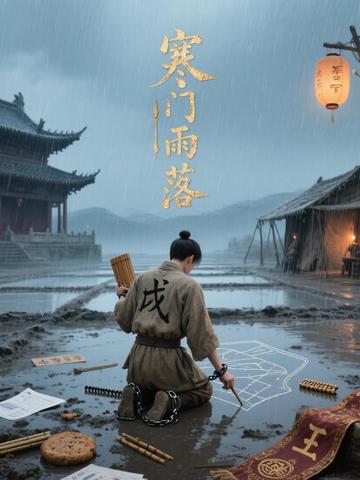
The Wei, Jin, Southern and Northern Dynasties described by Liang Qichao were an aristocratic era in which "there were no poor families in the upper class, and no noble families in the lower class" - the nine-rank Zhongzheng system consolidated the class, the Langya Wang family, Chenjun Xie family and other noble families monopolized power and wealth, and the iron chains of the military slave camps and the noble brocades weaved the most dazzling web of the era.
Lin Mo, a modern social animal, died suddenly and traveled to the Datong period of Nanliang. The cold rain in the military slave camp and the fluorescent light of the office buildings overlapped and turned into gray in his eyes: the torture of typos on bamboo slips was more bloody than the deficit in the report, and the iron shackles were colder than KPIs. With his report thinking and social animal memory, he carved his way out of the pile of bamboo slips: planning to dismantle the gentry's granary, drawing salt field drawings to challenge the iron law of monopoly, and drawing "equal land system" utopia on rough cakes.
This is no ordinary time travel. "Father" became a blade stabbing at the arrogance of the nobles, "involution" was mistakenly used as a spell by the slang tribe, the lever crossbow and the salt stamp system were turned into weapons of resistance; Xie Zhao's riding whip and the director's roar, Wang's genealogy and workplace relationships were originally different notes on the game of power.
In the novel, Chen Baxian's black armor hides sparks, Mrs. Xian's rattan armor echoes the clan charm, Zhao Hu picks brocade with a spear, and the children in the arithmetic class use their calculations to spell the word "equal" - in the quagmire of troubled times, they cling to the stubbornness of "turning their lives into fertile land". Half of the rough cake with Marx's portrait hidden in it eventually became rice seeds in Yazhou's salt fields, spawning new greenery in the scorched earth.
Opening "The Rain Falls at a Poor House", the smell of horse manure in the military slave camp mixes with the aroma of coffee in the office building, and the scratching sound of bamboo slips overlaps with the rhyme of the keyboard. This is an epic of resistance and a song of survival: no matter what era, there are always people who refuse to be crushed and plant hope in the cracks. Let's see how the modern soul can tip the balance of millennium-old nobles.