If tears were poetry, her life would be an eternal song.
Introduction to adaptation
A manuscript that has been dusty for hundreds of years reveals the most secret monologue in "A Dream of Red Mansions".
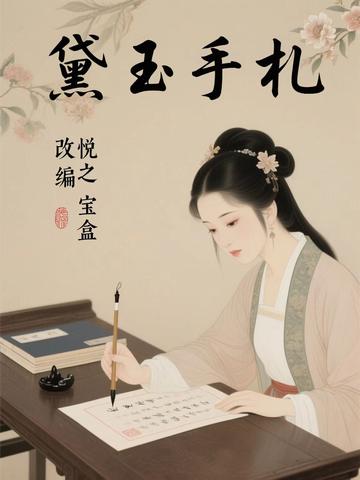
This book reinterprets "Notes of Lin Daiyu" written by Gu Chun, a talented woman from the Qing Dynasty, in modern vernacular. For the first time, Daiyu's first-person perspective is used to restore the ups and downs of her more than ten years of residence in Jia's house: from the palpitation when she first saw the jade, to the determination that "the words in her heart turned to gray" when she was buried with flowers and burned the manuscript;
This adaptation abandons obscure classical Chinese and uses poetic vernacular to reproduce Daiyu's graceful writing style, which is as classic and transparent as "when the peach blossoms fall, one becomes a creditor in spring"; The hidden writings in the original work are supplemented to reveal her fear of a "good match", her yearning for freedom, and her questioning of fate, showing a more substantial "rebel" Daiyu; a new annotation essay is added to echo Daiyu's "alone self-injury" with the emotional dilemma of modern people, and explore the "survival philosophy of sensitive people" in a time-space dialogue.
I hope that this adaptation will allow those who have read "A Dream of Red Mansions" but are unable to let go of Daiyu, those who yearn for a quiet place of writing in the hustle and bustle, and those who believe that "fragility is also strength" can open this book, not to read a story, but to enter a gentle judgment on self and the world.
Good looking [blowing kiss]