Choosing the fifteenth year of Shaoxing (1145) as the starting point for the story is a remarkably thoughtful decision. Nearly twenty years have passed since the Jingkang Incident of 1127, and the Southern Song has begun to establish itself in Jiangnan. The first Treaty of Shaoxing was signed only a few years earlier, in 1141, and a fragile peace now holds between the Song and Jin. This provides fertile ground for commercial growth and mounting internal tensions. Yue Fei was executed in 1142, the eleventh year of Shaoxing, and Qin Hui holds all the power. The Southern Song court has entered what historians call the “autocratic rule of Emperor Gaozong and Qin Hui.” Society appears stable on the surface, but currents of unrest churn beneath it. This creates a perfect dramatic setting for the protagonist’s arrival: opportunities for commercial development abound, but political dangers lurk at every turn.
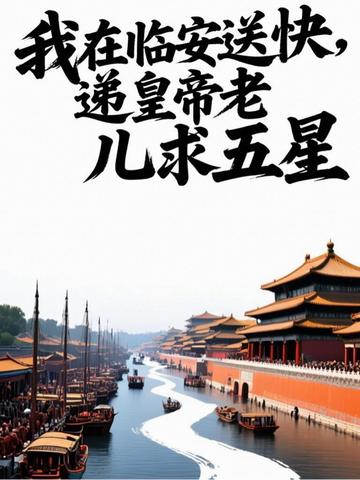
The story’s main settings, Quanzhou and Lin’an, also capture the spirit of the Southern Song with precision. During the Song and Yuan dynasties, Quanzhou was known as “the greatest port in the East.” A hub of the Maritime Silk Road, it drew merchants from across the world and was a place of cultural diversity and thriving commerce. It is an ideal testing ground for the protagonist to put modern knowledge into practice. Lin’an, present-day Hangzhou, was the Southern Song capital and the country’s political, economic, and cultural center. Its prosperity is vividly recorded in works such as Dream of the Red Chamber of the Southern Song. The French sinologist Jacques Gernet once remarked that China in the thirteenth century had “a degree of modernization that is astonishing.” As the protagonist’s activities move from Quanzhou to Lin’an, the conflicts rise from the level of local commerce to the heart of national economics and political power.
During the Southern Song, the country’s fiscal structure underwent a fundamental transformation.
Have fun and learn knowledge at the same time.