Stats
5.8Score
Synopsis
No synopsis yet.
We haven’t got an English blurb for this one. It appears once the source description has been translated.
We haven’t got an English blurb for this one. It appears once the source description has been translated.
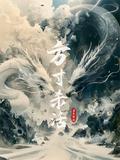
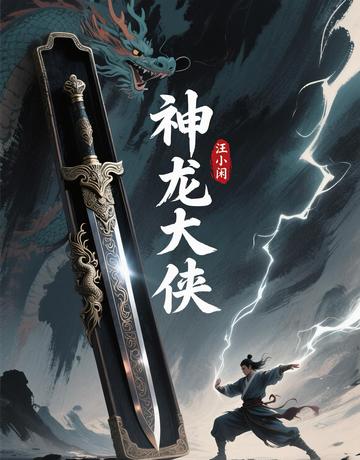
After reading "Dragon Hero", I seemed to see the ancient dragon reborn in a trance. This author not only copied its form, but also captured its soul - the paragraphs as short as the light of a knife, the artistic conception as cold as the autumn moon, and the poetic mood lingering between wine and blood, actually reproduced the joyful and gratifying yet desolate Jianghu described by Gu Long. "When the sword came out, the dragon roared, but there was a flash of cold light, but the sword was nowhere to be seen." Such sentences can be seen everywhere in the book. The author deeply understands the samadhi of Gu Long's language: short as a knife, blank as poetry, murderous and poetic coexist. He writes about the rivers and lakes, the human heart, and the unspeakable loneliness and determination. The writing style is so old that it doesn't look like an imitation, but like Gu Long borrowing someone else's pen to bring him back to life. The character creation of Wang Xiaoxian is particularly skillful. He has both the unruly and unruly character of a typical Gu Long hero, and the unique demeanor of a divine dragon. The author does not directly write how heroic he is, but writes about his loneliness when drinking, his compassion when facing the enemy, and his "seemingly casual but never casual" way of life. This kind of shaping is not only consistent with Gu Long's brushwork, but also avoids a simple copy of Li Xunhuan. The world of the book is vast, and the battle between good and evil goes beyond superficial killings. The author digs deep into the gray areas of human nature like Gu Long: "The so-called villains are mostly forced by the decent." Various conspiracies are unfolding layer by layer, and it is indeed as suspenseful as Gu Long's later works.
The best thing about this book is that it completes the martial arts origin of "Xiao Li Flying Knife". Xiao Li, who is famous for his flying daggers in Gu Long's works, originally learned the "Eighteen Styles of the Dragon Flying Knife" from Wang Xiaoxian, the Dragon Warrior. The author not only writes about the inheritance of martial arts, but also about the spiritual continuation - the philosophy that "a flying knife is not only a knife, but a Tao". It is written in the book that when Wang Xiaoxian realized the true meaning of flying knives, he said: "When the knife is shot, there is no victory or defeat in the heart, only what should and should not be." This state of mind was the source of Li Xunhuan's "Although the flying knives are fast, the benevolence is even faster". "Dragon Warrior" goes beyond ordinary pastiche, it is an affectionate tribute to Gu Long and a logical expansion of Gu Long's martial arts universe. The rivers and lakes described by the author have the shape and soul of an ancient dragon. Reading this book is like drinking mellow wine, with a bitter taste in the pleasure. Just as Gu Long said: "The wine of Jianghu people is never for tasting, but for getting drunk." This author should continue writing. After Gu Long, there are very few people who can capture its essence like this.
OK thank you teacher
It's a very good novel
This book is very well written. The first one on the entire network in my opinion.
A good book with a good storyline. Thank you to the author for your hard work. I give you a thumbs up!