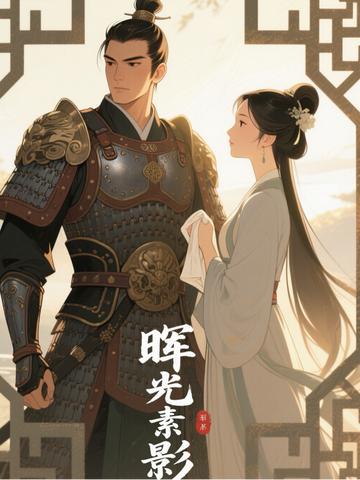
"Hui Guang Su Ying" uses the long history spanning thousands of years as the canvas, weaving an epic scroll intertwined with the machinations of emperors and civil society. The work connects the rise and fall of dynasties from Qin to Qing through the political game between ten emperors and queens. At the same time, the fate of the seven generations of Wu Guang's family is used as a hidden line to construct the dual dimensions of "big history" and "small narrative". From the iron-blooded machinations of Ying Zheng and Lu Fei to the elegy of the prosperous times between Hongli and the Fucha family, the core themes of each film closely follow the pulse of the times - survival in troubled times, the cost of expansion, and the predicament of cultural governance are layered in the stories of emperors and empresses. The career changes of Wu Guang's family from farming and weaving to practicing medicine, and from farming to business are like a prism, reflecting the silent response of civil society to the changes in imperial power.
The novel breaks through the grand narrative of traditional historical novels and blends power struggles with family daily life. Feminine traits such as Lu Pheasant's forbearance, Wei Zifu's flexibility, and Empress Changsun's wisdom are embodied in details such as brocade weaving, housekeeping, and medical practice, forming a millennium echo of "female perseverance." At the same time, the works use artifacts, classics, and folk customs as carriers, such as the contrast between the compilation and banning of the "Yongle Dadian", the conflict between calendar integration and literary inquisition, revealing the complexity of the inheritance of civilization. The tenth part, "Echoes of Ancient and Modern Times," casts its perspective on the contemporary era. Through genealogy tracing and intergenerational dialogue, it explores the enlightenment of history on reality, and finally uses the metaphor of "continuous light" to complete the philosophical speculation on individual destiny and the torrent of history.
This "microscopic" narrative strategy allows readers to feel the coldness of power in Xianyang Palace and touch the warmth of life in the streets.