She wrote in her diary: "Grandpa said that 'being born under a red flag' is a blessing, and I feel that 'growing up in the spring breeze' is a responsibility - to tell the wisdom of our ancestors to the world and let more people know that China has never been a 'barbarian', but a civilization that has lasted for five thousand years."
Zhen Meili stands at the crenellation of the Xi'an city wall, stroking the bricks in her left hand (renovation layer in the Ming Dynasty), and holding a mobile phone in her right hand (showing the city wall map of "Xi'an Prefecture" in the Qing Dynasty), with the skyline of modern Xi'an behind her. She smiled at the camera: "From Shang Yang's standing trees to nano-repair, from Zhang Qian's camel bells to the whistle of the high-speed rail, we have never stopped. Because we are - Chinese."
Reader comments
The characters in the novel are rich and full. The ancients are no longer cold names in history books. They have flesh and blood. Facing the history played on the screen, they each show complex emotions and characters. Like Emperor Wu of the Han Dynasty, when he saw the evaluation of later generations for his expansion of territory, he was both proud and reflective about the sequelae of the war; when Li Qingzhao saw the rise and fall of the Song Dynasty, his eyes were full of worries about the fate of his family and country. These vivid characters allow readers to better understand the impact of history on individuals and deepen their understanding of historical events.
However, this type of novel also has some shortcomings. Some are too pursuing a sense of pleasure, and their adaptation and interpretation of history are slightly random and deviate from historical facts. Others have poor control over the plot rhythm, causing the story to drag on and affecting the reading experience. I hope that in their subsequent creations, the authors can give full play to their imagination and polish the rhythm of the plot while respecting history, making the story of "History Played on the Sky" more exciting.
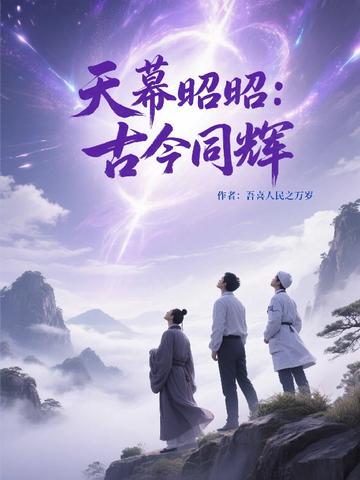
The characters in the novel are rich and full. The ancients are no longer cold names in history books. They have flesh and blood. Facing the history played on the screen, they each show complex emotions and characters. Like Emperor Wu of the Han Dynasty, when he saw the evaluation of later generations for his expansion of territory, he was both proud and reflective about the sequelae of the war; when Li Qingzhao saw the rise and fall of the Song Dynasty, his eyes were full of worries about the fate of his family and country. These vivid characters allow readers to better understand the impact of history on individuals and deepen their understanding of historical events. However, this type of novel also has some shortcomings. Some are too pursuing a sense of pleasure, and their adaptation and interpretation of history are slightly random and deviate from historical facts. Others have poor control over the plot rhythm, causing the story to drag on and affecting the reading experience. I hope that in their subsequent creations, the authors can give full play to their imagination and polish the rhythm of the plot while respecting history, making the story of "History Played on the Sky" more exciting.