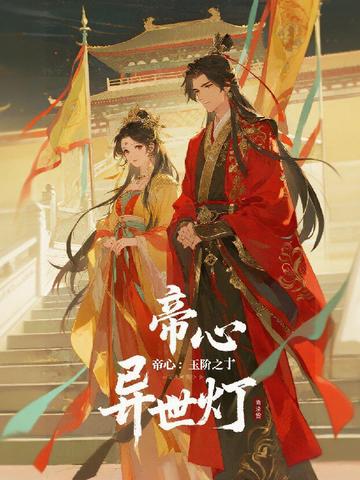
When Lin Wei, a graduate student in history, opened her eyes, she had become Shen Wei, the daughter of a condemned official in the Great Jing dynasty, fallen from the heights into the grimy churn of the laundry bureau. Armed with a modern mind, she had to struggle within the rigid hierarchy of the palace: washing royal garments with wood-ash water, avoiding political schemes through the logic of mutually beneficial exchange, and even meeting the emperor’s gaze without lowering her own.
The seventeen-year-old new emperor, Xiao Che, was being squeezed under the thumb of Huo Lin, the “foster father” who held power over the entire court. He feigned timidity and concealed his sharpness, but one day in the imperial garden, he found a memorial annotated by Shen Wei: “Distribute grain according to labor, not household registration.” The idea, far ahead of its time, was like a glimmer of light falling across his carefully laid plans.
Huo Lin commanded the army and was loyal to the realm, not the young emperor. He disliked Shen Wei, unaware that this palace maid was using forensic logic to reopen old cases, applying disease-control knowledge to save people from plague, and even daring to tell him, “History books aren’t always true.”
When the vassal princes tried to seize the throne and forged evidence of treason pointing to Huo Lin, Shen Wei was denounced as a “witch” and condemned to be sacrificed. Xiao Che finally dropped his disguise. He personally led guards through a secret passage, while she set off a signal flare. In this contest for power, there was no absolute good or evil, only an emperor’s growth, a general’s choices, and a soul from another world overturning the rules.
Beneath the jade steps, she was the unexpected variable. Beyond the palace walls, he looked toward the “distant land without walls” she had described. Power was a game of chess, and people’s hearts were the pieces. Whose road would that light from another world ultimately illuminate?