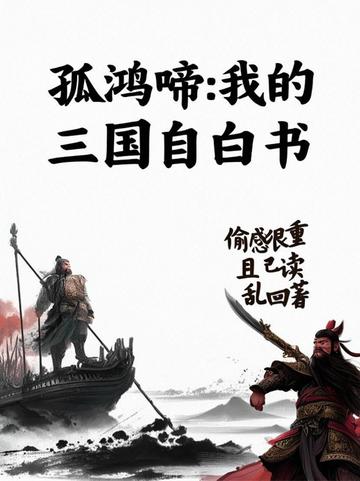
"Gu Hong Cry: My Confessions of the Three Kingdoms" is based on the first-person monologues of the heroes of the Three Kingdoms such as Cao Cao, Zhou Yu, Guan Yu, etc., And uses the image of "Gu Hong" to connect the lonely fate of the heroes in troubled times. When he was defeated at Chibi, Cao Cao lamented that "I can't fly in my life." "Out of the net of the times", Cao Cao stared at Guan Yu's back on Huarong Road and insinuated that "the hero cherishes the hero because he is afraid of seeing his own shadow strangled by the word 'righteousness'" and other subversive inner confessions, breaking the grand narrative framework of history books, in "seven parts historical fact and three parts fiction" It reconstructs the flesh-and-blood details of history, such as the "bloody mud soaked boots are like pulling out of hell" on the battlefield of Guandu, and the micro-historical view of "children's tears burning through the iron armor" when Liu Bei led the people across the river. The epic shell is torn apart, and Zhuge Liang asks himself "continuation" in the original autumn wind of Wuzhang. The interrogation of the soul of "The Lantern of Life illuminates the Han Dynasty, or Kong Ming is unwilling to give in" reveals the boundaries of ideals and obsessions in the whirlpool of power, allowing the heroes of the Three Kingdoms to transform from symbols in the annals of history into "lonely heroes" struggling between machinations and destiny, and they are still crying after thousands of years.