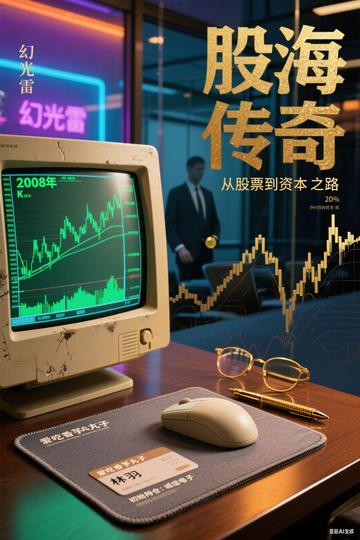
In the bear market in 2008, Lin Yu entered the market with 50,000 yuan, but lost as much as 20,000 yuan due to following the trend. This fiasco made him realize: the stock market is not a gambling table, but a cognitive game.
He started from scratch, from value theory to field research, and turned around by investing in pharmaceutical stocks. In the 2014 bull market, he used the "low valuation + industry reversal" strategy to make profits through leverage, but during the 2015 stock market crash, he relied on blue-chip stock positions for hedging.
A single market has limitations, so he turned to diversified investments: applying for a private equity license, participating in private placement, and investing in A-shares and Hong Kong stocks. After the domestic market encountered bottlenecks, he went overseas - betting on Indonesian logistics, betting on German semiconductors, and deploying new energy in Brazil. Every investment goes through twists and turns: valuation negotiations, compliance reviews, and supply chain layout.
From 50,000 retail investors to managing US$22 billion in capital, Lin Yu has spent twenty years proving that the true meaning of capital is to harness resources—promoting the mass production of solid-state batteries, realizing the synergy between car-sized chips and lidar, and counter-cyclical bargain hunting. Standing on the global capital stage, he finally realized: The ultimate answer to the stock market is not to beat the market, but to follow the rules.
Reader comments
Is the increase too small? If you spend tens of thousands of dollars, it's only one or two thousand. How many are these? Still like this?
Did I read it wrong or write it wrong? Can you see the trend of Moutai in 2018 in 2008?




Is the increase too small? If you spend tens of thousands of dollars, it's only one or two thousand. How many are these? Still like this?
Did I read it wrong or write it wrong? Can you see the trend of Moutai in 2018 in 2008?